Last October I stood in a parking lot in the Smokies at 6:40 a.m., watching a queue of headlights snake toward a trailhead that, four years ago, you could have had entirely to yourself. By nine, that trail looked like a shopping mall on Black Friday. The mountains hadn't changed. The crowd had found them.
This is the new reality of the hidden mountain retreats away from tourist crowds you keep seeing promised online: the moment somewhere gets labelled "hidden," it stops being hidden. So I stopped trusting lists and built my own screening method. What follows is what actually holds up — where to go, how to tell a genuinely secluded place from a merely under-reviewed one, and the compromises nobody mentions in the glossy cabin photos.
Key Takeaways
- True seclusion is measurable: distance to the nearest paved road, cell coverage, and how many rental listings sit within a few kilometres of your door.
- The East Coast cabin belt around the Smokies is the most saturated market in the US — anywhere within 30 minutes of Gatlinburg or Bryson City is no longer a retreat.
- Real quiet usually costs you something concrete: no cell signal, a rough access road, a longer drive, or a permit you have to book months ahead.
- Off-season timing does more for solitude than any destination choice. Swap the calendar before you swap the map.
- Cabin photos tell you almost nothing. Reviews that mention "getting there" tell you almost everything.
Why truly hidden mountain retreats are getting harder to find every year
The problem isn't a shortage of mountains. It's a shortage of mountains without infrastructure. Every time a county paves a forest access road or extends fibre up a valley, that valley joins the rental market within two or three seasons. I watched this happen to a stretch of the Blue Ridge I'd been visiting since 2019: unpaved for years, then graded, then listed on every booking platform, then fully booked from May to October.
The discovery pipeline, in plain terms
A place typically goes through four stages. First, local knowledge only. Then a photographer posts it. Then short-term rentals appear. Then the trailhead gets a paved lot and portable toilets.
If you want genuine solitude, your job is to catch places in the first two stages — which means accepting imperfect information. No polished website. Sometimes a phone number and a handwritten confirmation email. That friction is the feature, not the bug.
Here's what I've learned to screen for, in order of how much each factor predicts actual quiet:
- Drive time from the nearest town with a supermarket. Under 20 minutes and you're in the pipeline. Over 45 and you're usually safe for now.
- Number of rental listings within roughly 10 km. I check the map view on booking platforms and count. More than about a dozen and you're in a cabin cluster, not a retreat.
- Road surface. Gravel or worse filters out most casual visitors automatically.
- Cell coverage. A dead zone is uncomfortable and effective in equal measure.
- Whether the local land agency requires permits for access — a permit cap is the most reliable crowd-control mechanism that exists.
How to tell a genuinely secluded cabin from a marketing label
Search results for secluded cabins are dominated by the same handful of regions, and the Smokies area in particular. That's not because it's the quietest place in America — it's because it has the highest density of rental inventory, so it wins on volume. A cabin described as "secluded" there often sits in a row of eight identical cabins, all with hot tubs, all visible from one another in winter.
The photo test that saves you a wasted weekend
Zoom into the window reflections in the listing photos. Seriously. If you can see another roofline in the glass, the property is not secluded. If the aerial shot conveniently crops tight, that's usually deliberate.
Then read the reviews and search them for one phrase: "getting there." People who struggled on the access road always write about it. Ten reviews mentioning a steep gravel driveway is your best possible signal. Zero reviews mentioning the approach usually means it's a paved subdivision.
What real seclusion actually costs you
Every genuinely remote place I've stayed in has asked for a trade. One cabin in the Cascades had no power beyond a generator and a wood stove, which was wonderful until the second night when the temperature dropped and I realised I'd underestimated how much firewood a wood stove eats. My mistake, entirely. Another, in the Sierra, needed high-clearance tyres on a road I would not have attempted in a standard sedan.
The trade-offs cluster into recognisable types:
- Access — unmaintained roads, seasonal gates, snow closures from roughly November.
- Connectivity — no mobile signal, satellite internet that fails in heavy cloud, or nothing at all.
- Water. Some off-grid properties require you to haul it or boil from a spring.
- Supplies, as in a 45-minute round trip for milk.
- Permits — some public-land cabins and campsites are released on a rolling booking window and vanish within minutes.
- Wildlife storage rules, which are non-negotiable in bear country.
Where to look beyond the Smoky Mountains
The east has been picked over. If you want the feeling of having a ridge to yourself, point your search west and north instead.
Regions that still reward a little effort
The Bitterroot Range along the Montana–Idaho border has enormous roadless areas and very few rentals relative to its size. The Absaroka and Wind River country in Wyoming gets visitors, but they concentrate in a few famous valleys; two drainages over, you can drive for an hour without passing another vehicle.
In the Northeast, the Adirondacks are quietly one of the best options in the country: a huge protected park, a long tradition of rustic camps, and a permitting system on the most popular high peaks that genuinely thins the crowds. Maine's western mountains around Rangeley and the Carrabassett Valley get a fraction of the traffic of the White Mountains just across the state line.
Further afield, the Dolomites outside the three or four marquee valleys, the Carpathians in Romania, and the Andes south of Mendoza all offer the same equation: real mountains, sparse infrastructure, low prices, and no queue at the trailhead.
| Region | Approx. drive from a major airport | Access difficulty | Typical connectivity | Best season for solitude |
|---|---|---|---|---|
| Smokies backcountry (NC/TN) | 1.5–2.5 hours | Low — mostly paved | Reliable 4G in most valleys | Late winter, early spring |
| Bitterroot Range (MT/ID) | 3–4 hours | Medium — gravel and forest roads | Patchy to none | September, October |
| Adirondacks (NY) | 2–3 hours | Low to medium | Spotty, dead zones common | Late October, early November |
| Western Maine highlands | 2–3.5 hours | Medium | Weak or absent | After Columbus Day until snow |
| Southern Carpathians (RO) | 2.5–4 hours | High — 4x4 often needed | Often none | May, late September |
Notice the pattern: the places with the worst access and the weakest signal are the ones that stay quiet. That's not a coincidence, and it's the single most useful thing I can tell you about this whole subject.
Timing beats destination, every single time
You can visit a famous mountain on a quiet day and a forgotten one on a busy one. Which means the calendar is a more powerful tool than the map.
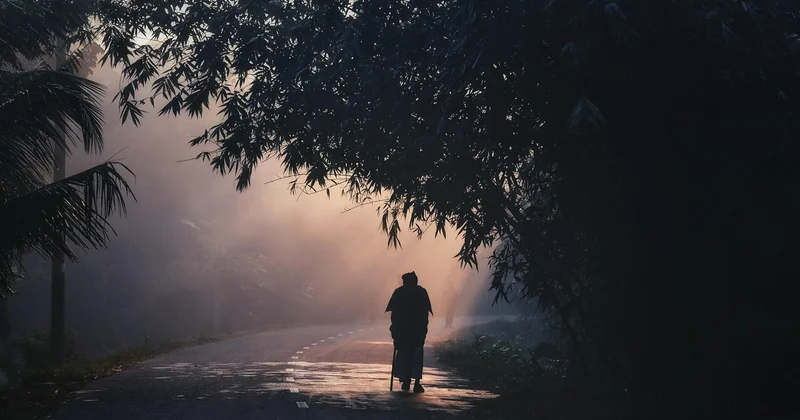
The shoulder-season rule
In most mountain regions, the crowds are compressed into three windows: the summer school holidays, the autumn colour peak, and the winter holidays. Everything else is negotiable. I've stood alone on trails in late October that were shoulder-to-shoulder in July, same trail, same year.
If you're booking a secluded vacation rental, the price gap tells you where the demand is. A cabin that costs $300 a night in mid-October and $120 in the same week of November is telling you exactly when to come.
Midweek is not a myth
Most rentals run Saturday to Saturday, which means Sunday night through Thursday morning is structurally emptier. I've had entire valley campgrounds to myself on a Tuesday in August. It feels almost illicit.
The practical checklist before you book anything
Run through this and you'll filter out the false promises fast.
- Confirm the road surface and whether a standard car can make it.
- Ask directly about mobile coverage and internet — "we have Wi-Fi" tells you nothing about speed.
- Check the booking platform's map view and count nearby listings.
- Read reviews specifically for access complaints and neighbour noise.
- Ask who owns the surrounding land, and whether logging, hunting, or development is planned.
- Verify permit requirements with the managing land agency before you assume you can just turn up.
- Check the fire restrictions in force that season. This one catches people out constantly.
The thing nobody tells you
The search for a hidden retreat is a bit self-defeating. The more precisely any guide tells you where to go, the faster that place stops being hidden — and I'm as guilty of that as anyone writing about it. What actually protects a place isn't secrecy. It's friction: a rough road, a permit window, a dead signal, a longer drive than most people will tolerate on a Friday evening.
So the honest advice isn't a list of coordinates. It's a way of choosing: pick somewhere slightly inconvenient, go when the weather is slightly worse, and accept that you'll lose a signal and gain a valley. The mountains that remain quiet in 2026 are the ones that ask you to earn them. Which, given what you're looking for, may be exactly the point.