There's a specific kind of darkness you only find about ninety minutes past the last gas station. No glow on the horizon. No amber haze from a town you can't see yet. Just a sky so crowded with stars that your brain, trained on suburban light pollution, takes a few minutes to stop looking for constellations and start seeing the actual shape of the Milky Way.
People ask me constantly where to go for that. I've slept in the back of a truck in the Atacama, gotten a flat tire on a graded road in Nevada with no cell signal, and once badly underestimated how cold a desert gets at 4 a.m. The answer is never a single place. It's a fit between the sky you want, the drive you're willing to make, and how much discomfort you'll trade for it.
Key takeaways
- Distance from cities matters more than altitude or celebrity. A Bortle Class 2 site three hours from the nearest town beats a famous Class 3 site near a resort corridor.
- Southeast Arizona, the Nevada outback, and the Chilean Altiplano are the three regions I keep returning to, for different reasons each time.
- You don't need a telescope. You need new moon timing, twenty minutes of dark adaptation, and a headlamp with a red filter.
- Fuel, water, and tire condition are the real logistics of remote stargazing. Nobody rescues you quickly out there.
- Winter offers the longest nights and the crispest air, but desert cold at 2 a.m. is not a small thing.
Remote desert destinations for stargazing: how to actually choose one
Start with the honest metric: how far is the nearest town with a gas station that stays open past 9 p.m.? That distance predicts your sky quality better than any certification badge. I've stood under a Gold Tier site that was thirty minutes from a casino parking lot, and the western horizon was visibly brown. Gold Tier tells you the core is protected. It doesn't tell you the whole sky is clean.
Once you accept that, the planet narrows fast. You're looking for four things at once: a dry climate with a high count of clear nights, genuine remoteness, a road you can survive, and a season that won't kill you.
Reading the Bortle scale without overthinking it
The Bortle scale runs from 1 (pristine) to 9 (inner-city). For a trip worth the drive, you want Class 1 or 2. In practice:
- Class 1 — the zodiacal light and airglow are visible, and the Milky Way casts a faint shadow. Rare, and usually several hours from anything.
- Class 2 — the Milky Way is bright and structured, with visible dark lanes. This is what most well-chosen desert camps deliver.
- Class 3 — still good, but light domes sit on the horizon. Fine if you only care about the zenith.
- Class 4 and above — the Milky Way is washed out near the horizon. Not worth a remote trip.
Spoiler: a lot of "dark sky" campsites I've booked were solidly Class 3. Still beautiful. Not the same thing.
Why dry air beats cold air
Transparency comes from low humidity and stable air, not from temperature. A high, cold desert with a marine layer forty miles away will fog your view. A slightly warmer desert with 15% relative humidity will not. This is the single reason the Atacama outperforms almost everywhere else on Earth — the air is so dry that the atmosphere itself stops being the limiting factor.
The best remote desert stargazing in the USA
If you're not crossing an ocean, the American Southwest is where you want to be. Three zones stand out, and I'll be honest about the trade-offs.
Southeast Arizona: the highest concentration
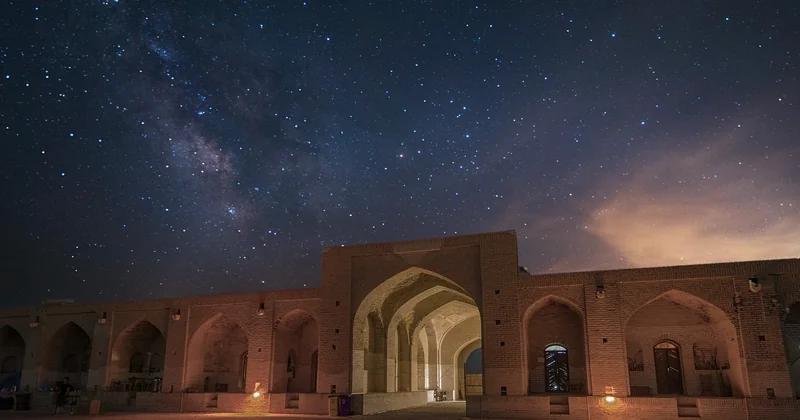
Arizona has legal protections on dark skies in several counties, and the density of observatories reflects it. Outside the towns, you're in Class 2 within an hour, and the drive itself is manageable in a normal car. The catch is that it's popular, so "remote" means booking a dispersed camping spot ahead of a busy season.
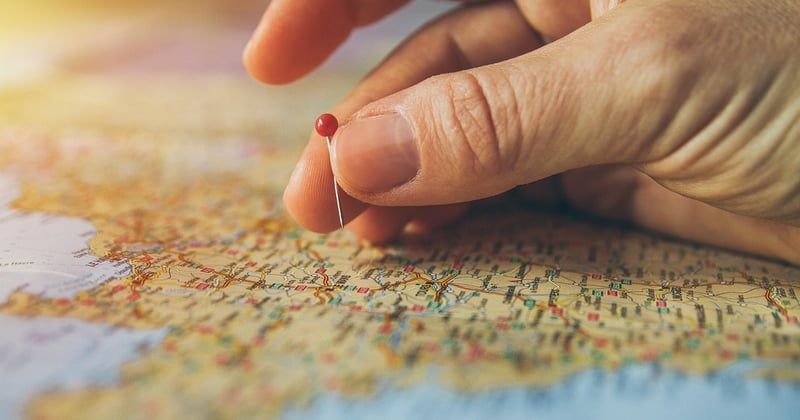
I did a two-week loop through the region a while back, camping and moving every couple of nights. What stuck with me wasn't a single site — it was realizing how little of the state you can see if you stay on the interstates. The good skies require the backroads. Bring a paper map; the offline apps failed twice on me.
The Nevada outback: real remoteness
This is where you go if you want genuine distance from everything. Fuel gaps of a hundred miles are normal. Cell coverage is a rumor. The 4x4 requirement is not marketing — several graded roads will chew up a low-clearance car, and I watched a sedan turn back within a mile of a surface I'd already cleared.
The reward is a sky with almost nothing on the horizon. I once sat through a meteor shower out there on a night so still that I could hear the camp stove from fifty feet. That's the class of trip you pay for with discomfort, not money.
Making the call
If you want easy access and reliable conditions, choose Arizona. If you want the feeling of being genuinely far from people, choose Nevada. If you want both, drive between them and camp in the middle.
| Region | Typical Bortle class | Distance to fuel | Vehicle needed | Best season |
|---|---|---|---|---|
| SE Arizona | 2 | 30–60 min | Standard car | Spring, fall |
| Nevada outback | 1–2 | 60–120 min | High-clearance 4x4 | Late spring, early fall |
| Chilean Altiplano | 1 | Remote, hours | Guided vehicle | Southern winter |
| Namib desert | 1–2 | Very remote | Guided | Their winter |
Where the world's other serious desert skies are
Chile: the professional standard
Roughly half the world's large observatories sit in the same high desert band over the Andes. The air is thin, dry, and absurdly stable. For a traveler, this means multi-day stargazing packages that pair lodging with a guide and a scope, usually around new moon. It's expensive compared to camping. It's also the closest most people will get to a sky that looks genuinely alien.
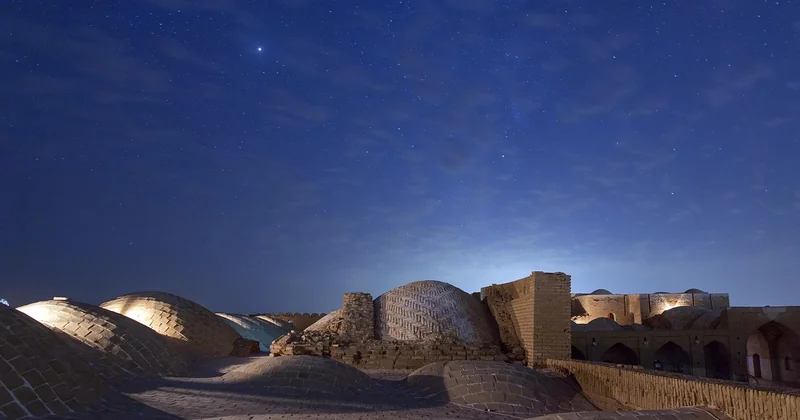
The altitude is real. I got a headache my first night at the base elevation and needed two days to feel normal. Acclimatize before you blame your eyes.
Namibia's NamibRand
One of the few places designated for sky protection at a national level, and the surrounding reserve is enormous. The nights are long and the transparency is excellent. Logistically it's a bigger commitment than anything in the U.S. — you're flying into a remote strip and staying on a reserve, not pulling off a highway.
Europe, if you can't cross an ocean
High deserts in Spain and a few sites in the Canary Islands offer genuinely dark skies within Europe. They aren't as pristine as the Atacama, but for a weekend trip they're dramatically better than anything on the mainland coast. The trade-off is that "remote" in Europe still means someone within an hour's drive.
The questions I get the most
Where can I go stargazing in the desert?
Any dry, high, remote desert with a low Bortle class works: the American Southwest, the Andean Altiplano, and southern Africa are the three most reliable regions. Within the U.S., the Nevada outback and southeast Arizona are the two I'd point you toward first. The key is not the desert itself, but how far you are from light and how dry the air is.
Where is the best place to go on vacation for stargazing?
It depends on your tolerance for travel. If you want a short trip and reasonable comfort, a guided lodge in the Atacama is the strongest all-round choice. If you want to stay in North America and drive yourself, a multi-night loop through southern Arizona is excellent. If you want the deepest darkness and don't mind a long flight and a truly remote setting, the Namib desert wins on raw sky quality.
What is the best place on Earth for stargazing?
For consistency, the Atacama takes it. The combination of altitude, extreme dryness, and clear nights is unmatched, and the density of professional observatories reflects that. Other sites can beat it on a given night, but over a season the Atacama is the safest bet.
What is the best stargazing tour in the USA?
There's no single best tour. What matters is that the operator takes you genuinely far from city light, provides red-filtered light and a guide who explains what you're seeing, and schedules around the new moon. Look for multi-night options in southern Arizona and the Nevada desert, and verify the departure point's distance from the nearest town before you book.
Logistics that actually matter
Here's where most stargazing guides stop being useful. They tell you to go, not how to survive the drive.
- Fuel — fill up at the last open station, every time, even if the gauge reads fine. I've driven out with half a tank and sweated the whole return.
- Water — carry more than you think. Desert nights are cold but the days are not, and a breakdown means you're sitting in the heat until someone passes.
- Spare tire and a real jack — a seasonal reality. I've had two flats on graded roads in as many years, both in places with no signal.
- Red light — white light ruins everyone's dark adaptation for twenty minutes. A cheap red headlamp changes the whole experience.
- Paper map — offline apps fail. So do phone batteries.
- Warm layers — desert temperature swings are brutal after sunset.
Timing your trip
Aim for the new moon, or within a few days of it. Check the moon phase before you book anything. And give your eyes twenty minutes — most people give it five and conclude the sky is fine. It isn't yet.
What keeps bringing me back isn't any single location. It's the moment, usually an hour past dark, when you stop counting stars because there are too many. You can't get that anywhere near a city. You have to earn it with a long drive and a cold night.
The first time you feel that, you'll understand why the discomfort was worth it.