Three vehicles, one leopard, twenty minutes of silence. That's how my first game drive in the Kruger ended — not with a chase, not with a roar, just six strangers holding their breath while a cat the size of a large dog decided whether to cross a dirt road. Nobody spoke. Nobody took a single photo. And that afternoon taught me more about wildlife safaris than every guidebook I'd read beforehand.
So here's what I'd tell anyone heading out on their first wildlife safari: the animal sightings are the least predictable part, and they're also the least important thing to prepare for. What actually determines whether you come home elated or disappointed is everything around the sighting — how you choose the reserve, how you pace the day, how you behave in the vehicle. Let me walk you through it.
Key Takeaways
- National parks, private conservancies and concessions behave very differently — vehicle density and off-road rules matter more than the brochure admits.
- Your day has two golden windows: roughly 90 minutes around sunrise and the same before sunset. Everything in between is logistics.
- Neutral colours, layers, and a soft bag beat almost any gear you'll see advertised.
- Photography is optional. Patience is not.
- Large mammals are not guaranteed. Birds, tracks and insects are — and they reward attention.
- Book the drive, not just the lodge. In many areas they're sold separately, and morning slots go first.
Wildlife safari tips that actually change your trip
Most first-timer advice you'll find online is a packing list and a pep talk. Useful, but incomplete. The decisions that shape your experience happen weeks before you zip the duffel bag, and they're structural: which land you're driving on, who's driving you, and how many other people are watching the same lion.
Pick the land before the lodge
Here's the thing nobody explained to me on my first booking: "safari" describes at least three different legal and commercial arrangements, and they produce very different days.
National parks — the Serengeti, Kruger, Etosha — are state-run. Rules are strict. Vehicles generally stay on designated tracks, which keeps the bush intact but means a cheetah sighting can turn into a queue of twelve cars along a single road. The scale is enormous, the crowds are real.
Private conservancies sit on community or private land bordering the parks. Fees often flow to landowners and local households. Rangers may drive off-road, which gets you closer to a hunting wild dog pack than any public track allows. Vehicle numbers are capped per sighting. The trade-off is that the land is usually smaller, and some animals move in and out.
Concessions are leased parcels inside or beside a national park, operated commercially. Fewer beds, higher prices, and access to both the private parcel and the public park. I've had my two best sightings on concession land, and my two most crowded on a public road a week later.
| Type | Off-road driving | Vehicle density | Typical cost profile |
|---|---|---|---|
| National park | Rarely allowed | High at key sightings | Lowest entry fees |
| Private conservancy | Usually permitted | Capped per sighting | Mid to high |
| Concession | Often permitted | Low, limited beds | Highest |
| Self-drive park | Strictly on-road | Depends entirely on you | Cheapest overall |
None of these is objectively better. If your budget is tight and you don't mind sharing a road with a dozen other cars, a self-drive park trip delivers real sightings for a fraction of the cost. If your priority is a single quiet hour with a leopard, pay for the concession.
The real rhythm of a safari day
Wake-up calls at 5:15 a.m. Coffee in the dark. Out the gate as the sky turns grey. Back at camp around ten, exhausted. Lunch. A long dead stretch. Out again at four. Sundowners on a rock. Dinner. Bed by nine. Repeat.
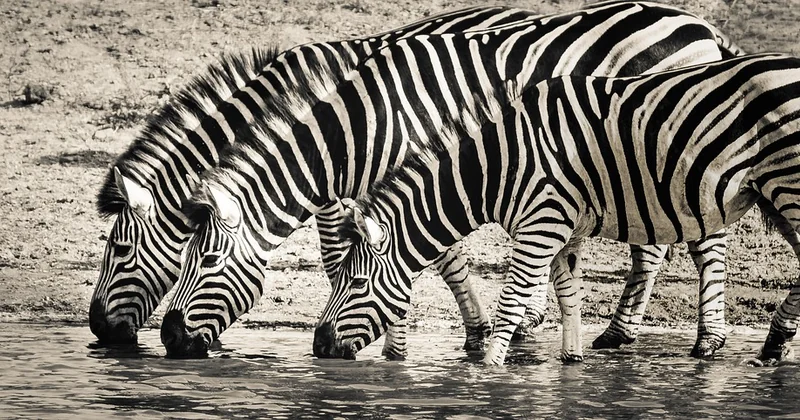
That rhythm exists for biological reasons. Predators hunt mostly in the cool hours. Prey move. Birds feed. By mid-morning, in most savanna ecosystems, the bush simply dozes — and so should you. On my second trip I stubbornly joined a midday drive, convinced I'd catch something the others missed. I saw four impala and a very hot guide. Total waste of a good nap.
How long should a game drive last
Two to three hours is the sweet spot for a first safari. Longer drives exist — full-day circuits with a packed breakfast, night drives with spotlights where permitted — and they're worth doing once. But new eyes saturate fast. I'd rather do two sharp drives a day than one marathon.
Also worth knowing: night drives are regulated differently from daylight ones. In many national parks they're simply not allowed; in private conservancies they usually are. If seeing nocturnal species matters to you, that's another reason to check the land status before booking.
What first-timers get wrong in the vehicle
The single biggest mistake I see — and I made it — is treating the vehicle like a theatre seat. It isn't. You are a guest inside a working situation, and the ranger is reading ground every second.
- Standing up to get a better angle. Fine in a closed 4x4 where everyone shifts together, genuinely dangerous in an open-sided truck. Ask first.
- Loud reactions. A sharp gasp can spook a cat mid-stalk. Whisper, or say nothing.
- White and bright blue clothing. Not a myth. Bright synthetic colours stand out against dry bush, and tsetse flies are drawn to dark blue and black. Neutral tones are quieter, for you and for the animals.
- Perfume, scented lotion, strongly flavoured snacks. You'll be in a small metal box for hours.
- Leaving the vehicle. Unless your guide explicitly says otherwise, at a designated spot, at a designated moment — never.
And the one nobody warns you about: don't ask the ranger to guarantee anything. Wild animals are wild. A guide who promises a leopard on Tuesday is either lying or has a radio network doing heavy lifting. They will find what the bush offers that morning.
Packing light and packing right
Lodge laundry is usually cheap or free, and bush flights impose hard soft-bag weight limits, often around 15 kg on light aircraft. Two sets of clothing plus layers beats a full wardrobe. Here's what actually earned its place in my bag across four trips:
- Neutral long-sleeve shirts — sun and insect protection in one layer
- A fleece or light down jacket, because open vehicles at 6 a.m. are genuinely cold, even near the equator
- Binoculars. Eight-by-forty-two is the classic compromise; anything smaller frustrates you, anything bigger gets heavy around your neck
- A wide-brim hat and high-factor sunscreen
- Refillable water bottle — most camps have potable refill points now
- Headlamp with a red-light mode
- Any personal medication, plus oral rehydration salts
The one thing I've stopped carrying: a heavy camera rig. On my last trip I shot most of my best frames on a phone through a pair of binoculars, and I spent far more time actually watching. Your mileage will vary.
Do you need a telephoto lens
No. You need reach, which binoculars give you, and you need light, which a phone handles badly in the dawn hours. If you already own a 100–400 mm lens, bring it. If you'd have to buy one for this trip, borrow or rent instead — and spend the money on a second morning drive. That's the trade I'd make every time.
When things go wrong, and they will
My worst safari day involved no animals at all. Torrential rain from midnight to noon, tracks turned to soup, vehicle stuck twice, and a guide who cheerfully announced we'd be spending the morning birdwatching from under a tarp. I sulked for the first hour. Then I noticed the bee-eaters, three species I'd never seen, hunting in the mist. It ended up being the most memorable morning of the trip.
The other failure mode is more common: you pay for five drives, and the megafauna simply don't cooperate. A friend did a ten-day Kenya itinerary for her first safari and never saw a rhino. She saw a cheetah with cubs on day two, which is objectively rarer, but it didn't register until weeks later.
Set your expectation on the small things — tracks in the sand, a dung beetle doing its absurd work, the sound of a go-away-bird at dawn — and the big sightings become a bonus rather than a verdict on your trip.
The question that stays with you
What nobody tells you is that a safari changes what you consider ordinary. Six months after my first drive, I caught myself standing in my own back garden, listening. Same posture, same patience, no leopard.
That's the part you can't pack for. Book the concession or the park, take the 5 a.m. slot, wear the boring shirt, and put the camera down for ten minutes. The bush rewards people who wait. It always has.