You drive four hours to Yosemite, pay the entrance fee, and spend the next ninety minutes circling a full parking lot at Tunnel View. That's the trade most people accept without questioning it. But here's what the reservation systems quietly proved: when Yosemite introduced peak-hours vehicle reservations, it wasn't solving overcrowding — it was just redistributing it. The crowds didn't vanish. They queued online instead of at the gate.
So I stopped chasing the famous parks. Over the past few seasons I've been mapping out lesser known national parks for crowd free adventures, and what I found surprised me: the alternative isn't a worse version of the icons. In several cases, it's a better one. You get the same geology, the same silence, and — critically — you get to actually stand still and look at it.
Key Takeaways
- Great Basin, North Cascades, and Guadalupe Mountains deliver iconic scenery with a fraction of the foot traffic.
- Timing matters more than location: Tuesday-to-Thursday visits in shoulder months beat any weekend in July.
- Some quiet parks come with real trade-offs — unpaved access roads, thin services, no cell signal.
- A handful of parks cap daily entry, so checking permit rules before you book flights is non-negotiable.
- The most reliable crowd-avoidance trick is entering before 8 a.m. or after 4 p.m., not picking a "secret" park.
Why the famous parks broke — and why the fix isn't more parking
Popularity has a ceiling, and several parks hit it years ago. Great Smoky Mountains, Yellowstone, Zion and Yosemite consistently rank among the most-visited units in the entire system, drawing millions of people annually. That's not a seasonal spike. It's the baseline now.
The response has been reservation systems, shuttle mandates, and timed-entry windows. Reasonable tools, but they treat a symptom. The underlying problem is geographic concentration: a small number of parks absorb the demand that a much larger network could share.
What the reservation systems actually changed
I watched this play out in real time on a trip to a reservation-only park a couple of summers back. The gate was calm. The trailhead wasn't. Everyone who'd booked the same 6 a.m. slot arrived at the same 6 a.m. hour, so the first two miles of trail felt like a shopping mall on a Saturday. The bottleneck moved; it didn't disappear.
Which taught me something useful: a reservation is not a crowd-avoidance strategy. It's a permission slip. The strategy comes from which park you choose and when you show up inside it.
The math nobody quotes at the entrance gate
Here's a blunt way to think about it. If a flagship park pulls in millions of visitors across a roughly four-month busy window, you're looking at a daily crush in the tens of thousands on peak days. A lesser-known park in the same system might see a few hundred thousand people across an entire year.
Same agency. Same standard of scenery. Wildly different experience.
The catch? The quiet parks usually don't have the infrastructure to absorb a sudden influx, which is precisely why they stay quiet — and why you should treat them gently.
Underrated national parks that reward the detour
I'm not going to hand you a list of twenty names. Most of those roundups recycle the same handful and pad them out. Instead, here are the parks I'd actually plan a trip around, with an honest note on what each one costs you in convenience.
Great Basin, Nevada — the darkest skies in the lower 48
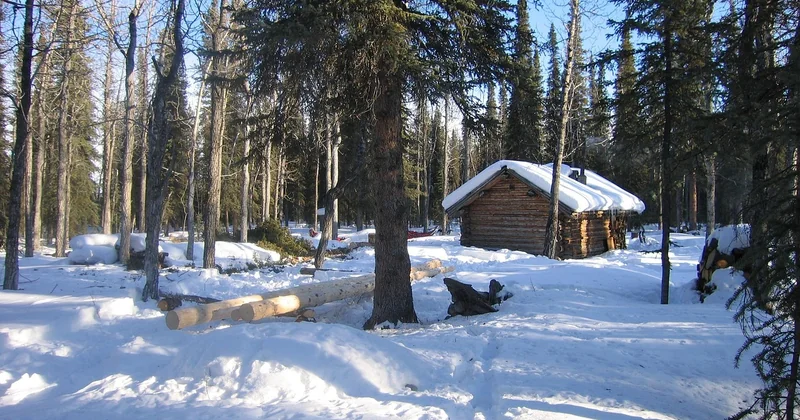
Great Basin sits in eastern Nevada, hours from any major airport, and that isolation is the whole point. It's home to ancient bristlecone pines that were already old when the pyramids went up, plus a cave system and some of the darkest night skies you'll find in the contiguous United States.
What it costs you: lodging inside the park is minimal, so most people base themselves in the small gateway towns and drive in. Cell coverage is patchy. Bring water and don't expect a coffee shop at every turn.
North Cascades, Washington — alpine without the queue
North Cascades is often described as having more glaciers than any other park in the lower 48, and yet it barely registers in visitation rankings. The North Cascades Highway cuts straight through, which makes it one of the easiest quiet parks to see by car if you're short on time.
I spent two days here in early autumn and shared a lakeside trail with maybe six other people. Six. In a park with scenery that would be mobbed anywhere else.
Guadalupe Mountains, Texas — the one everyone drives past
Guadalupe Mountains sits right next to Carlsbad Caverns, which is exactly why it gets skipped. Travelers do the cave, grab lunch, and move on. Meanwhile the park behind it holds the highest peak in Texas and a fossil reef that predates the dinosaurs by a wide margin.
The trade-off is heat and distance. Summer afternoons are brutal, and services are sparse. Go in spring or fall, start early, and carry more water than feels reasonable.
Congaree, South Carolina — a floodplain forest you can paddle
Congaree protects an old-growth bottomland forest, and the move here is a canoe or kayak on Cedar Creek rather than a hike. It's within easy reach of a state capital, which makes it one of the most accessible quiet parks in the East — and yet most visitors to the region have never heard of it.
Which national parks are best for avoiding crowds?
The parks best for avoiding crowds share three traits: they're far from major population centers, they lack a single famous "must-see" icon that draws bucket-list traffic, and their busy season is narrow. Great Basin, North Cascades, Guadalupe Mountains and Congaree all fit that profile.
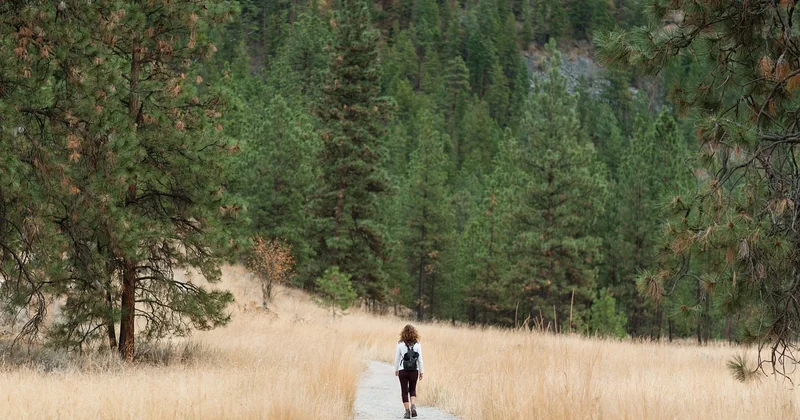
But geography alone isn't the whole answer. A remote park can still feel packed if it has one short trail everyone does and no alternatives. The real measure is dispersed access — lots of trails, lots of trailheads, so people spread out instead of funneling into one spot.
What are the least crowded national parks in May?
May is the sweet spot for a lot of the quieter parks, because the snow is melting at higher elevations while the summer crowds haven't arrived. North Cascades and Great Basin both open up nicely in May, though high passes can still hold snow — check road status before you commit.
Desert parks like Guadalupe Mountains are also pleasant in May, provided you hike early. By mid-afternoon the heat turns a pleasant walk into a slog.
The secret trick to avoid crowds at national parks
There's no secret park. That's the honest answer, and it's the one most articles won't give you.
The trick isn't where — it's when, and it's unglamorous. Enter before 8 a.m. or after 4 p.m. Most day visitors arrive between 9 and 11 and leave by mid-afternoon. That leaves you two golden windows, and they're free.
Second trick: visit Tuesday through Thursday. I've compared the same trail on a Wednesday in June and a Saturday in June, and the difference wasn't subtle. It was roughly three times the people on the weekend.
Third: go in the shoulder months. Late May, September, and early October consistently deliver good weather with a fraction of the traffic.
What are some underrated national parks to visit?
Beyond the four above, keep an eye on the parks that sit near better-known attractions and get overshadowed by them. That adjacency is a reliable signal — the famous neighbor absorbs the crowd, the quiet one keeps the scenery.
Comparing the quiet parks at a glance
| Park | Best season | Access difficulty | Services on site |
|---|---|---|---|
| Great Basin, NV | Late spring–early fall | High — long drive from airports | Minimal |
| North Cascades, WA | July–October | Moderate — highway access | Limited |
| Guadalupe Mountains, TX | Spring & fall | Moderate — remote but drivable | Sparse |
| Congaree, SC | Spring & fall | Low — close to a city | Basic |
The trade-offs nobody mentions
Quiet parks are quiet for reasons, and pretending otherwise would be dishonest. I learned this the hard way on a trip where I assumed a remote park would have the same amenities as a flagship. It didn't. The visitor center closed early, the one nearby gas station shut at 6 p.m., and I spent a cold night rationing a granola bar.
So plan for these realities:
- Unpaved or rough access roads that demand a vehicle with decent clearance
- Almost no cell signal, which means downloading maps and telling someone your route
- Camping that fills on weekends even in "empty" parks
- Emergency response times measured in hours, not minutes
- Water sources that may not exist where you expect them
- Limited food, fuel, and lodging for dozens of miles
None of that should scare you off. It should just change how you pack.
Who should skip the quiet parks entirely
If you're traveling with young kids, need accessible facilities, or want a park where everything is a short walk from a paved lot — the flagship parks are genuinely the better call. They're built for volume. That's the point of them.
How to plan a crowd-free trip that actually works
Start with the calendar, not the map. Pick your travel window first, then find a quiet park that's in season during it. Doing it the other way around is how people end up at a snowed-in trailhead in April.
Then build in slack. If a park is four hours from the nearest airport, add a buffer day. If it has no gas station, fuel up before the last town. Small logistics decide whether a remote trip feels adventurous or miserable.
And check the permit rules directly with the park before booking anything non-refundable. Some quiet parks have started capping daily entry, and the rules change.
The last thing worth saying: the point of seeking out lesser known national parks isn't to collect a cheaper version of a famous experience. It's that these places give you something the busy parks can't — the chance to stand somewhere and hear nothing but wind. That's not a consolation prize. It's the whole reason to go.