
Somewhere in the hills above the Adriatic, there's a village where the only morning sound is a baker rolling up a metal shutter at 6:40. No tour buses. No selfie sticks. No restaurant with a menu in four languages. I found it by accident, after taking a wrong turn off a regional road because I'd misread a hand-drawn map on a gas station wall.
That's the thing about the secret European villages tourists rarely visit — they don't announce themselves. They sit at the end of roads that don't show up on rental car GPS, or behind a train line that stopped running in the nineties. You don't find them through a listicle. You find them because you got lost, or because a local told you to skip the town you were planning to see.
I've been chasing these places for years now. Some were incredible. Some were a waste of a full day and a tank of fuel. Here's what I actually learned — including the mistakes that cost me time and money.
Key takeaways
- Genuinely under-visited villages are almost never near an airport — 90 minutes of driving is the practical cutoff before crowds start appearing.
- The best way to find them is a negative filter: look for settlements with no train station and no bus connection from a major hub.
- Shoulder season matters more than winter. Late April and mid-October give you open businesses and empty streets at the same time.
- You need a car, cash, and at least one phrase in the local language. Two of those three are non-negotiable.
- If a village appears on a "10 most beautiful villages" list, you're already late — usually by three to five years.
Why the usual suspects are no longer secret (and what that teaches you)
Colmar in Alsace gets shared about a million times a summer. Bruges, in Belgium, has been a weekend-break staple for so long that locals in the outer neighborhoods now talk about the center as a separate place they simply avoid. Bratislava's old town fills up with stag parties every Friday. Luxembourg's Grund district, gorgeous as it is, is essentially a photo backdrop with a queue.
None of this is a tragedy. It's just a signal: the moment a place becomes easy to reach, it stops being quiet. The mechanism is boringly simple. A rail link, a low-cost airport route, or one viral video shortens the distance between "curiosity" and "crowd."
So the real question isn't which village is prettiest. It's which village is annoying to get to. That single criterion eliminates about 80% of the "hidden gems" you'll find online.
The three filters I actually use
After a few years of trial and error — and one genuinely bad trip to a Slovenian village I'd built up in my head for months — I settled on a short checklist:
- No train station. A village with its own stop on a regional line has already been discovered by domestic weekenders.
- Population under 1,500. Above that, you start getting a small hotel chain and a gift shop.
- At least one daily-life building still in use — a school, a post office, a working bakery. If everything is a museum, you've arrived at a theme park with cobblestones.
That third point matters more than people think. A village that's been fully converted to tourism feels hollow. You walk around, take the photo, and you're done in forty minutes. A village where someone is still buying groceries and arguing about parking has a pulse.
The villages that actually delivered
I'll name specific places here, because vague advice is useless. But I'm also going to tell you where they are relative to the crowd, so you can judge for yourself whether they're worth the detour.
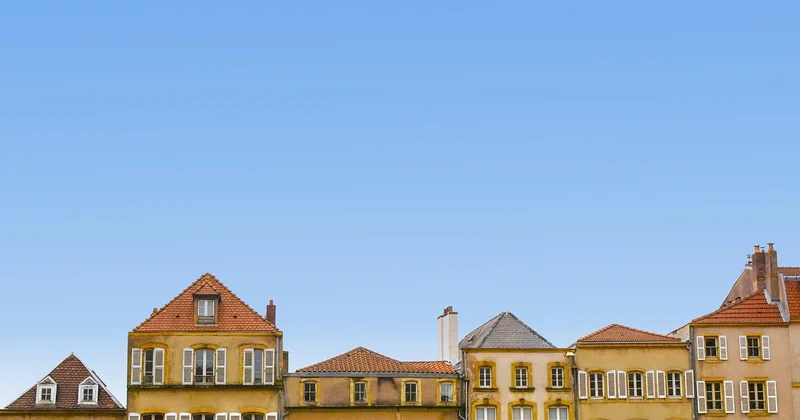
Eastern Croatia, inland — not the coast
Everyone on a Croatia trip goes to Dubrovnik, Split, or Hvar. Almost nobody drives ninety minutes inland from the coast into the Slavonian hills. I spent four days there and saw exactly two other foreign visitors — both cyclists, both German, both lost in the same way I was.
The villages in that region have a specific texture. Vineyards on slopes, cellars cut into the hillside, and a population that has been shrinking for thirty years. The upside: guesthouse rooms run around 35 to 50 euros a night, and the food is heavy, cheap, and honest. The downside: many shops close by 6 p.m., and outside July and August, some restaurants simply don't open at all. I learned that the hard way on a Tuesday in late September and ended up eating bread and cheese on a bench.
The Baltic interior
Riga and Tallinn get the traffic. Drive two hours east of either city and you enter a landscape of birch forest, manor houses, and villages where the average age is somewhere north of 55. In Estonia, I stayed in a converted farmhouse near a village that didn't appear on Google Maps' street view coverage at all — a surprisingly useful signal for how rarely it gets visited.
What surprised me most was not the scenery. It was the pricing gap. A full lunch for two — soup, main, coffee — came to roughly 18 euros. The same meal two hours west, in a coastal town, cost more than double. Same country, same language, completely different economy.
Caucasus foothills in Georgia
Georgia has become a popular destination, which is exactly why you have to go further. The villages around the upper reaches of the river valleys, past the point where the paved road gives up, are still largely off the tourist circuit — mostly because getting there takes a 4x4 and a driver who knows the route.
I hired a local driver for a day. Cost: about 70 euros, including his time, fuel, and a very long lunch. We visited three villages. In one, an old man poured me a glass of his own wine at 11 in the morning and insisted I finish it. That's not a charming detail I'm inventing — it happened, and it's the kind of thing that only happens where tourism hasn't yet standardized the encounter.
How to find them yourself (with a map, not a listicle)
Here's where most guides fall short. They hand you a list of names, which means the list itself becomes the crowd. What you actually want is a method.

The negative map method
Open a map of your target country. Turn on the transit layer. Now look for the gaps — the areas with no rail lines, no major highways, and clusters of small settlements. Those gaps are your search zone. I came across a reference to a "secret European villages map" once that organized places by how many transfers it takes to reach them. That's the right instinct: measure the friction, not the beauty.
The catch? Some of those gaps are empty for a reason. Remote doesn't automatically mean charming. Twice I drove two hours to find a village with one closed café and a lot of barking dogs. Total waste of time — but that's the tax you pay for finding the good ones.
What to check before you commit
- Does the guesthouse have any reviews at all from the past year? If not, it's either brand new or closed.
- Is there any mention of the place in the local language? No results in the local language usually means no local activity.
- How far is the nearest hospital or fuel station? Sounds excessive until you're on a mountain road at dusk.
- Cash situation. Many of these villages have no ATM. I hit this problem in rural Romania and had to drive 40 minutes for an ATM that turned out to be out of order.
A quick reality check on timing and costs
One thing practically every guide glosses over: when you go changes the entire experience, and what it costs changes even more.

| Season | Crowd level | What's open | Typical room price (double) |
|---|---|---|---|
| July – August | Peak for domestic travelers | Everything | 55 – 90 € |
| Late April – May | Very low | Most things, some on weekends only | 35 – 55 € |
| October | Low | About half; restaurants often close by mid-month | 30 – 50 € |
| November – March | Almost nobody | Very little; some villages effectively shut | 25 – 45 € |
My honest take: late April and early October are the sweet spots. You get weather that doesn't fight you, prices that are roughly a third below peak, and streets where you're the only foreigner at breakfast. Winter is gorgeous but risky — I once planned a three-village route in February and managed to visit one, because two guesthouses had closed for the season without updating their listings.
The logistics nobody warns you about
Getting to these places is the hard part. That's the whole point, but it's worth being precise about what "hard" means in practice.
Transport realities
From a major city, expect 90 minutes to three hours by car to reach a genuinely quiet village. Public transport rarely works. When it does, it's often a single daily bus timed for school children or shift workers — meaning you arrive at 7:15 a.m. and leave at 3 p.m. or you don't leave at all.
Rental cars are the practical answer. Book them well ahead in small countries; I've twice paid nearly double because I booked three days out. In Georgia, a driver is usually the better choice over self-driving, both for the roads and for the navigation.
What it costs on the ground
Daily budget in most of these places, per person, if you're not trying to be frugal:
- Lodging: 30 – 60 €
- Food and drink: 15 – 25 € (generous portions, local wine included)
- Fuel and parking: 8 – 15 €
- Coffee and small extras: under 5 €
That puts you well under what a comparable day costs in a Western European city. But you're trading convenience for it. Which brings up the piece most people underestimate.
Language and hospitality
In villages of 400 people, English is not a given. In rural Georgia and parts of the Balkans, it's genuinely rare. Learn ten words: hello, thank you, please, excuse me, how much, where is, water, bread, good, goodbye. That's it. It changes everything. People are far more open when you've made even a token effort, and I've been invited into homes purely because I tried to say "thank you" correctly.
Real talk: the warmth you get in these places often isn't about the scenery. It's about the fact that you showed up when nobody else did, and you made an effort. That's a transaction, in a way. But it's a fair one.
Should you actually go?
Yes — with caveats, and honestly, the caveats matter more than the recommendation.
If you want reliable restaurants, English menus, and a schedule that fits neatly into a long weekend, these villages will frustrate you. I know because they've frustrated me. If you want the specific feeling of walking through a place that isn't performing for you, that's exactly the tradeoff you're making.
One last thing, and it's the part I care most about. The reason these villages are quiet isn't romantic. It's usually economic decline, emigration, and an aging population. Tourism can help, or it can hollow a place out further. I've seen both, in different villages within an hour of each other. So go — but go the way you'd want someone to visit your own town. Buy from the local shop. Eat where the locals eat. Don't treat a place with 400 residents as a set piece.
The bakery shutter at 6:40 in the morning? That's still a bakery. And if enough of us forget that, in ten years the only sound in these villages will be a tour guide's microphone.