You're standing on a wooden platform above a river in northern Thailand, and a sixty-year-old elephant named Mae Bua is deciding whether you're worth her time.
She isn't chained. She isn't carrying anyone. She's just standing there, ripping bark off a ficus branch with a trunk that could crush your ribcage and, for now, has no interest in doing so. That single moment—an animal choosing to be near you or not—is the entire point. It's also the thing most "sanctuary" websites never mention, because it doesn't photograph as well as a rider on an elephant's neck.
If you're searching for ethical elephant sanctuaries to visit responsibly, you've probably already noticed how murky the word "sanctuary" has become. There are dozens of them across Thailand, and the names all sound reassuring. The problem is that a name tells you almost nothing.
Key Takeaways
- The word "sanctuary" is unregulated in Thailand and most of Southeast Asia—any camp can use it.
- Riding, bathing shows, and "elephant selfies" remain the clearest red flags, even when dressed up as "cultural experiences."
- Genuine ethical operations allow elephants to walk away from tourists and often limit visitor numbers per session.
- Bangkok has no sanctuaries; the closest real ones are hours outside major cities.
- Ask who owns the elephants and where they came from—the answers reveal more than any website design.
What makes an elephant sanctuary genuinely ethical?
Forget the marketing language. The animals themselves tell you whether a place is legitimate, and they tell you within about ten minutes of arriving.
An ethical operation is built around a specific principle: the elephant's daily life should resemble what it would do in the wild, minus the dangers. That means foraging, walking in loose family groups, dust-bathing, and—crucially—having the option to ignore you entirely. I once watched a visitor at a well-known camp try for twenty minutes to get an elephant to pose for a photo. The elephant turned her back and kept eating. Nobody rushed her. That's a good sign.
The non-negotiable criteria
Here's the checklist I use, and I'll defend every line of it:
- No riding. Not "no riding except for short distances," not "traditional riding." None. An adult elephant's spine isn't built to carry a howdah and two people, and the training required to make it compliant is brutal.
- No bathing-with-tourists as a paid show. This one trips people up. A quick splash in a river that the elephant initiates is fine. A daily scheduled scrub where paying guests climb in and scrub the animal's back is a performance, and the timing is set for the camera, not the animal.
- No breeding for tourism. Captive breeding keeps the supply of "visitor-friendly" elephants flowing. Ethical projects generally don't breed deliberately.
- Free-roaming within a fenced area large enough to matter. If the elephants are on short chains at night, walk away.
One more thing that nobody puts in a listicle: observe the mahouts. A good mahout uses voice and a light touch behind the ear. A bad one carries a bullhook openly and uses it. The bullhook is the single most reliable tell you'll ever find.
Ethical elephant sanctuaries in Thailand: where to actually go
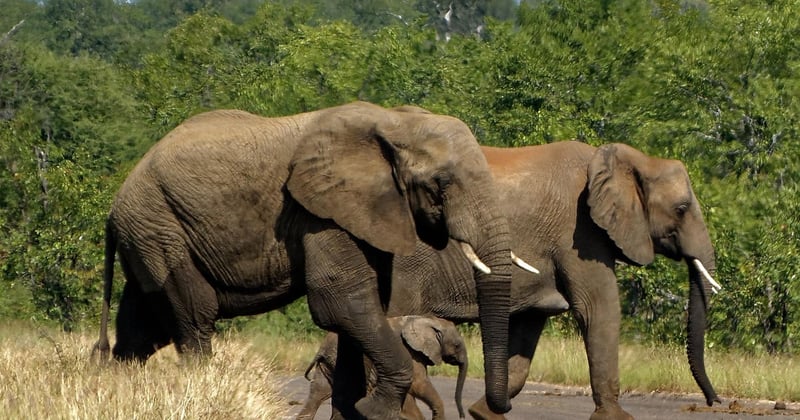
Thailand has more captive elephants than any other country in the region—roughly three thousand, by most credible estimates, though exact numbers shift as tourism patterns change. Of those, a growing share now live in facilities that have dropped riding altogether. The shift is real, and it happened faster than I expected when I first started paying attention to this space.
Elephant Nature Park, Chiang Mai
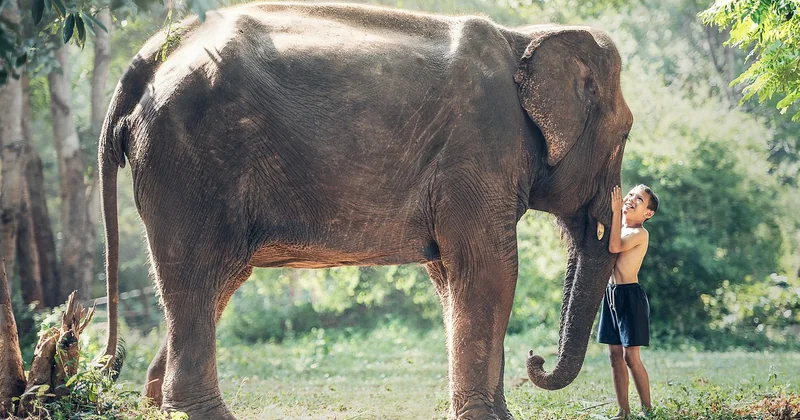
If you've done any reading on this topic, you've hit the name Elephant Nature Park already. It's the reference point for a reason. Founded by Lek Chailert, it rescues elephants from logging camps, riding operations, and street begging, and it has been riding-free from the start—long before that was commercially convenient.
The park sits in a valley about an hour north of Chiang Mai. Visitors walk with the elephants, feed them, and watch them interact in herds. Nobody rides. Nobody bathes with them on a schedule. The elephant-to-visitor ratio is deliberately kept uncomfortable for the operator and healthy for the animals.
Two caveats, and I mean them. First, it's crowded in high season. Book weeks ahead, not days. Second, the sheer popularity has spawned a cluster of imitators in the same valley using similar names—"Nature Park," "Elephant Park," "Elephant Nature Care." Check the exact name before you transfer money.
Smaller operations around Chiang Mai and Mae Wang
The Mae Wang district, southwest of the city, has become a hub for smaller, family-run projects. Some are excellent. Some are riding camps that rebranded last year. There's no shortcut here: you have to read reviews from the last six months specifically, and you have to look for the word "chain" or "hook" in the negative ones.
On a visit in 2024 I spent a morning at a small operation with four elephants and eleven guests. The owner had bought two of the animals out of a trekking camp and was transparent about the cost—over a million baht each, financed partly by tour bookings. That kind of honesty is worth more than a glossy website.
Ethical elephant sanctuary Bangkok and Koh Samui: what to expect
This is where I have to be blunt.
There is no ethical elephant sanctuary in Bangkok. Full stop. The city has no space for free-roaming herds, no natural foraging, and no realistic way to give an elephant a decent life. Anything advertising a "Bangkok elephant sanctuary" is either a zoo with better branding or a day-trip operator that buses you two hours outside the city. That's not a scandal; it's just geography.
Koh Samui
Same story on the islands, with a partial exception. Samui does have one or two operations that keep elephants in genuinely large, forested enclosures and forbid riding. But the island is small, development is intense, and the elephants were almost certainly brought there from elsewhere. The travel itself—hours in a truck—is stressful for the animal.
If you're on Samui and want to see elephants, do it properly: fly to Chiang Mai and spend a full day at a reputable park. It costs more and eats a day of your trip. It's also the only version of this experience I'd personally recommend.
How to vet a sanctuary before you book
Here's the process I actually use, refined over a handful of trips and a couple of mistakes I'd rather not repeat.
Questions to ask by email
Send these before paying a deposit. A legitimate operator answers them without flinching.
- Do you offer riding in any form, including short "photo rides"?
- How many elephants do you have, and how many visitors per session?
- Where did your elephants come from, and who owns them?
- Are the elephants chained or tethered at any point during the day or night?
- Can visitors choose not to participate in any activity?
If a reply is evasive, that's your answer. If they send back a paragraph explaining their feeding costs and the land they lease, you're probably dealing with real people.
Red flags on site
| What you see | What it usually means | Verdict |
|---|---|---|
| Bullhooks visible and in use | Control through pain, not relationship | Leave |
| Elephants lined up for photos | Scheduled performance | Leave |
| Mahouts touching ears constantly to hold an elephant still | Animal is not free to move | Leave |
| Elephants walking away from groups, unbothered | They have genuine choice | Good sign |
| Fewer than ten visitors, no set schedule | Welfare over throughput | Good sign |
You don't need a certification to make this call, and honestly, no third-party label has yet solved this problem cleanly in Thailand. The World Animal Protection guidelines exist and are useful reading, but an operator's self-declaration of compliance means less than what you see in the first hour on the ground.
Is Elephant Nature Park worth the price?
It costs more than the camps, and you get less "action"—no rides, no bathing spectacle. What you get instead is a full day of watching elephants behave like elephants. The transparency about where each animal came from is unmatched. I think it's worth it. Whether you'll feel the same depends on whether you came for a photo or for the animal.
Can I visit an ethical sanctuary with children?
Yes, and many reputable parks welcome families. The important thing is to teach kids before you arrive: no touching unless invited, no chasing, no loud voices near the elephants. Some operations set a minimum age—usually around six or eight—for safety rather than ethics reasons. Ask when you book.
Ethical elephant sanctuaries near me—and the wild alternative
If you're searching for a sanctuary "near me" and you're not in Asia or Africa, the honest answer is that there probably isn't one within a reasonable drive. Elephants in zoos and circus-style parks are a different category of animal welfare problem, and no amount of visitor pressure fixes it in an afternoon.
The other thing worth saying: the best place to see an elephant is still the wild. Amboseli in Kenya, parts of Sri Lanka, and a handful of reserves in southern Africa offer sightings of elephants living without any human agenda attached. It's harder to arrange, more expensive, and it requires patience. It's also the only version of this encounter where the animal's entire day isn't shaped by your arrival.
If you go the captive route anyway—and I still do, because rescue work matters—treat it as a welfare visit, not an entertainment. Bring the checklist. Ask the awkward questions. Leave if the answers disappoint you.
Mae Bua never did decide I was interesting. She ate her branch, turned, and walked into the trees. The guide shrugged and said, "She does that." Which is exactly the point: at a real sanctuary, the elephant gets to do that, and you get to watch it happen.