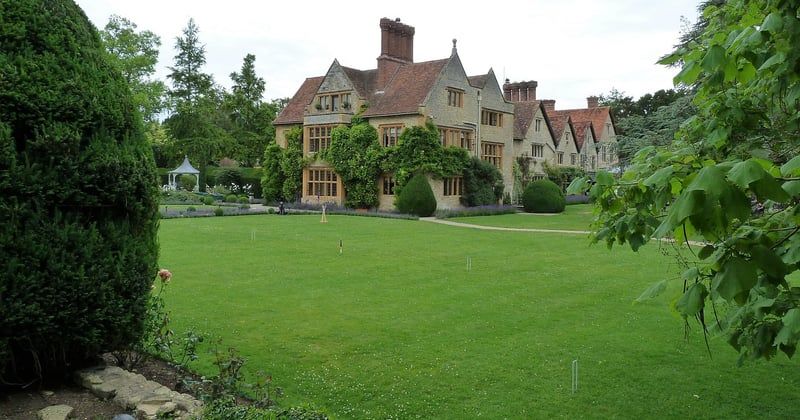
Forty-eight hours in Lisbon. That was the itinerary a friend sent me last spring, complete with a color-coded spreadsheet, three restaurant reservations per day, and a note that read "be flexible." I laughed, then I felt tired just reading it. She came back needing a vacation from her vacation. I came back from two weeks in one Portuguese town feeling like I'd actually lived there for a moment.
That gap—between collecting places and experiencing them—is the whole argument for slow travel. And it's not just a mood. It has real consequences for the planet and, honestly, for your nervous system. Let me walk you through what I've learned, including the part where slow travel can quietly backfire.
Key Takeaways
- Slow travel means staying longer in fewer places and moving between them by lower-carbon means. The environmental win comes mostly from skipping flights, not from the pace itself.
- A single long-haul round trip can outweigh every other green choice you make on a trip. The transport leg is where the emissions live.
- The personal benefits—deeper rest, better local spending, richer memory—are real, but they don't happen automatically. You have to design for them.
- Watch the rebound effect: staying longer can increase your total footprint if you treat "slow" as permission to travel more often.
- You don't need to be perfect. Cutting one flight a year beats a dozen small optimizations.
What slow travel actually means (and what it doesn't)
Here's the thing: slow travel is one of those phrases that marketing departments have stretched until it snaps. I've seen "slow travel" slapped on a five-country rail pass, which is just a fast trip with better branding.
The honest definition has two parts, and only two. You stay in a place long enough to stop performing tourism, and you get there and around using transport that isn't a plane whenever that's possible. Everything else—the yoga, the digital detox, the artisanal coffee—is optional decoration.
The two pillars: duration and distance
Duration is the one people talk about. Distance is the one that matters for the environment. I learned this the hard way.
My first attempt at slow travel, four years ago, was a month split between three Southeast Asian cities. I was proud of myself for going "slow." Then I counted the flights: four of them. My month-long "slow" trip had a bigger carbon footprint than a quick long weekend in a nearby European city would have. The duration didn't save anything. The planes decided everything.
- Duration changes your experience.
- Distance and mode of transport change your footprint.
- These are separate levers, and most articles blur them together.
If you take nothing else from this section, take that. Slow travel is often sold as an environmental fix. It's only an environmental fix when the transport changes.
Slow travel benefits for the environment: where the real savings are
Let's get concrete. Picture a typical short-haul flight—say 700 kilometers, roughly London to Edinburgh or Paris to Barcelona. That leg, per passenger, emits on the order of 150 to 250 grams of CO₂ per kilometer once you account for radiative forcing, the extra warming planes cause at altitude. The same distance by train lands closer to 10 to 30 grams per kilometer depending on the grid. Cycling and walking are effectively zero.

I'm not going to pretend I can hand you a precise, verified table of every route. What I can tell you is the shape of the comparison, and the shape is brutal: flying is ten to twenty times worse per kilometer than rail, and that gap is why a single decision beats a hundred small ones.
| Getting there | Typical emissions (order of magnitude) | What it changes |
|---|---|---|
| Long-haul flight | Highest by far; one round trip can dominate your yearly personal footprint | Everything. This is the lever. |
| Short-haul flight | Roughly 10x the train for the same route | A lot, especially on routes under 1,000 km |
| Train | Low; falls further on decarbonized grids | Real savings with minimal lifestyle cost |
| Bus / coach | Comparable to train, sometimes lower | Often the cheapest low-carbon option |
| Bicycle / walking | Near zero | Great for the last stretch, not the first |
Why transport dominates everything else
You'll see a lot of advice about reusing towels and skipping hotel laundry. Those are fine. They're also rounding errors next to a flight.
Consider the arithmetic. A long-haul round trip can produce several tonnes of CO₂ per person. Reusing a towel for a week saves a fraction of a kilogram. You would need to skip towel laundry for roughly a decade of hotel stays to offset one transatlantic flight. I'm being a little glib, but the ratio is genuinely that lopsided, and it explains why the aviation industry's share of global emissions—around 2 percent of the world's CO₂, with passenger flights making up the large majority of that—is so stubborn.
So when a hotel tells you it's a "green" property because of its towel policy, you know what's actually driving the number.
The personal benefits are not what you think
Mostly what people claim: less stress, more cultural connection, cheaper. The cheaper part is only sometimes true—a long stay in a single town can cost more than a rushed tour if you're paying monthly rent and eating well. I'll be blunt about my own experience: my two-week Portuguese stay cost about 40 percent more than a comparable-length fast trip I'd done the year before. Longer stays mean more days of rent, more meals, more of everything.

What I actually got for that money was different, and better:
- I learned the name of the woman who ran the bakery. That sounds like nothing. It reframed the whole trip.
- My sleep corrected itself by day five. I hadn't realized how badly jet lag was compounding on my usual multi-city sprints.
- I got bored, and boredom turned out to be where the good thinking happened.
- I stopped taking photos of food and started cooking it.
- I spent money on people, not on logistics.
None of that is a marketing bullet point. It's just what a slower timetable does to a person who's used to optimizing every hour.
The boredom effect (and why it's a feature)
Two weeks is the threshold, in my experience. Before that, you're still in arrival mode. After that, something loosens. You stop trying to extract value from every hour and start being somewhere. I can't prove this with a study—I don't have one and I won't invent it—but I've now done this enough times to trust the pattern. The good stuff shows up around day ten.
The rebound effect nobody warns you about
This is the part the glossy blogs skip. Staying longer can actually increase your total footprint if it changes how often you travel.

Here's the mechanism. If slow travel makes trips feel more restorative, you might take more of them per year because you no longer dread them. Three two-week trips instead of one. If those extra trips involve flights, you've just multiplied your emissions while feeling virtuous. This is a classic rebound effect, and I fell into it for about a year without noticing.
My fix was unglamorous: I budget flights per year, not trips per year. One long-haul round trip, maximum, most years. Everything else is by rail or stays home. That single rule did more for my footprint than every reusable water bottle combined.
How to do slow travel without the guilt
You don't need to become a monk about it. You need a few decisions you can actually keep.
- Pick your destination by what's reachable without a plane, at least sometimes. This one choice dwarfs the rest.
- Stay at least ten days. Shorter than that and you're just on a normal trip with a slower title.
- Book the transport before anything else. Once the train is booked, the trip designs itself around it.
- Choose one base. Two if you must. Every move costs you a day and a chunk of carbon.
- Accept that "green travel" is mostly an oxymoron if flying is involved. Travel less, and travel better when you do.
I want to be honest about the trade-off, because I've watched friends get paralyzed by it. If flying is the only way to see your family overseas, take the flight. Slow travel isn't a moral purity test. It's a set of tools for people who have the option to choose differently, most of the time.
The question worth sitting with
After enough trips, I stopped asking "how many places can I see" and started asking a slightly uncomfortable question: what would I want to keep from a place if I never photographed it? The answer turned out to be small things. A walk. A conversation. The specific light at seven in the evening.
Slow travel isn't really about the environment, in the end, even though the environmental case is the strongest one. It's about noticing that the fastest way to see the world is often the fastest way to miss it. The emissions are the measurable part. The rest—the part where you remember what a place actually felt like—that's the part you don't get to keep unless you slow down enough to let it land.