How to travel plastic free on your next vacation — without turning it into a second job
The first time I tried travelling plastic free, I came home with a suitcase full of garbage. Not souvenirs. Garbage. Three weeks in Southeast Asia, and I'd hoarded every wrapper, cup and straw in a zip bag because I couldn't find a bin that would recycle any of it. I landed back in Europe with 1.8 kilos of other people's packaging in my carry-on. My partner still brings it up.
That trip taught me something the cheerful zero-waste influencers never mention: going plastic free on holiday is not a packing problem. It's a logistics problem. You can buy all the bamboo cutlery you want — the plastic finds you anyway, at the airport gate, in the hotel bathroom, in the street food stall at 9 p.m. when you're starving and your principles are negotiating.
So here is what actually works, based on four trips since that disaster and a lot of trial and error.
Key Takeaways
- The plastic you avoid on holiday is decided before you leave, not during the trip.
- Check whether tap water is drinkable at your destination before you book — it shapes everything.
- A reusable bottle with a filter saves the most plastic per gram of luggage weight.
- Ask your accommodation to remove single-use plastics when you book, not when you arrive.
- Accept that some plastic will be unavoidable. Aim for 80%, not 100%.
- What you do with the waste you can't avoid matters as much as what you refuse.
Before you book: the decisions that actually move the needle
Here's the uncomfortable truth. The single biggest plastic decision of your trip happens weeks before you pack, when you choose where to go.
In Japan, you'll be handed a plastic bag for a single apple and nobody will blink. In Rwanda, plastic bags have been banned outright for years and shopkeepers will look at you like you've insulted their mother if you ask for one. Same planet, opposite realities. Ignoring this is how well-meaning travellers end up generating more waste than they would have at home.
Check whether the tap water is drinkable
This one variable determines whether you'll be buying bottled water three times a day or refilling from the bathroom sink.
In most of Western Europe, Japan, Australia, Canada and the United States, tap water is fine and you can drink it without a second thought. In large parts of South and Southeast Asia, Latin America, Africa and the Middle East, it usually isn't — not because the water is poison, but because your gut has no relationship with the local bacteria. Locals drink it. You probably shouldn't.
Which leads to the obvious question: what do you do when the tap is off-limits?
The filter question nobody answers properly
You have two realistic options, and they behave very differently.
| Option | Upfront cost | Weight | Best for |
|---|---|---|---|
| Reusable bottle with built-in filter | Higher | Around 500 g | Trips where tap water is questionable but you'll have sinks |
| Plain reusable bottle + refill stations | Low | Under 200 g | Countries with reliable tap water or good refill infrastructure |
| Water purification tablets | Very low | Negligible | Trekking, remote areas, emergencies |
| Buying bottled water anyway | Recurring | Zero | Nowhere. This is the thing you're trying to avoid. |
I've used all four. On a two-week trip through Vietnam and Cambodia, the filtered bottle replaced roughly 40 single-use bottles — I stopped counting after that, but the math is brutal once you realise you'd otherwise drink three or four a day in that heat.
What nobody tells you: filters clog. Mine slowed to a trickle after about ten days of hard use. Bring a spare filter cartridge or accept that the last three days of your trip will involve a lot of patient squeezing.
The flight, the train, the bus: plastic you didn't ask for
Air travel is where your plastic-free intentions go to die, and it happens in the first hour.
Let's be honest about cabin service. On a long-haul flight you will be offered a plastic cup, a plastic-wrapped meal, a plastic cutlery set sealed in more plastic, sometimes a plastic-wrapped blanket and a set of headphones in a bag. A single long-haul flight can easily generate more disposable plastic per passenger than a week on the ground.
Can you refuse it? Partly. Here's what works:
- Bring your own bottle and fill it after security. Most airports have water fountains past the checkpoint. Not all — but most.
- Decline the cup. Cabin crew will pour directly into your bottle if you ask. I've never once been refused.
- Say no to the plastic-wrapped blanket if you have a jacket. It's wrapped for hygiene theatre, not hygiene.
- Bring your own earbuds and you'll never open that little bag again.
- Pack a small cloth bag for the snacks and napkins you'll accumulate.
Trains are dramatically better, and this is a genuine argument for choosing rail over air when the route allows it. On a night train through Central Europe, dinner came on actual plates with actual metal cutlery. Nobody handed me a single plastic item in fourteen hours. That's not a small thing.
Buses and road trips
Same logic, different failure point. Roadside stops are where plastic wins. The convenience store at the service station is engineered to sell you a cold drink in a bottle, a sandwich in a box, and a coffee in a cup with a lid. Three items, three pieces of plastic, four minutes.
What saved me on a long bus journey through the Balkans was simple: I ate before boarding, and I carried a filled bottle plus a cloth bag of fruit and nuts. Boring. Effective. Total plastic generated: zero.
Where you stay matters more than what you pack
Most people spend their preparation time on gear. They should be spending it on emails.
Hotels are plastic factories with beds. Miniature shampoo bottles, disposable slippers wrapped in film, bottled water on the nightstand, single-use coffee pods, sealed cups in the bathroom, a plastic key card you'll never reuse. A mid-range hotel can hand a guest a dozen disposable plastic items in a single night without either party noticing.
The fix costs you one message at the booking stage. Something like: "We're trying to avoid single-use plastics during our stay. Could you remove the bottled water, the miniature toiletries and the wrapped slippers from our room? We're happy to bring our own."
Does it always work? No. Small independent guesthouses almost always say yes and often seem pleased. Large chains sometimes reply with a form letter about their sustainability commitments while continuing to deliver bottled water daily. I've had both. It's still worth the email, because the properties that say yes tend to be the ones worth staying at anyway.
The toiletry problem, solved once
Refillable containers are the standard advice, and they're right, but there's a detail that trips people up: airport security still limits liquids in carry-on, and a 100 ml refillable bottle of shampoo will last you maybe eight days.
My setup after several failed versions: one solid shampoo bar and one solid soap bar in a small tin, plus a refillable 100 ml bottle for anything liquid I genuinely need. Solid bars don't leak, don't count toward liquid limits, and don't come in plastic. It took me an embarrassingly long time to figure out that the simplest answer was the right one.
Food, markets and street stalls: the hardest part
Street food is where plastic-free travel gets genuinely difficult, and where most guides get vague.
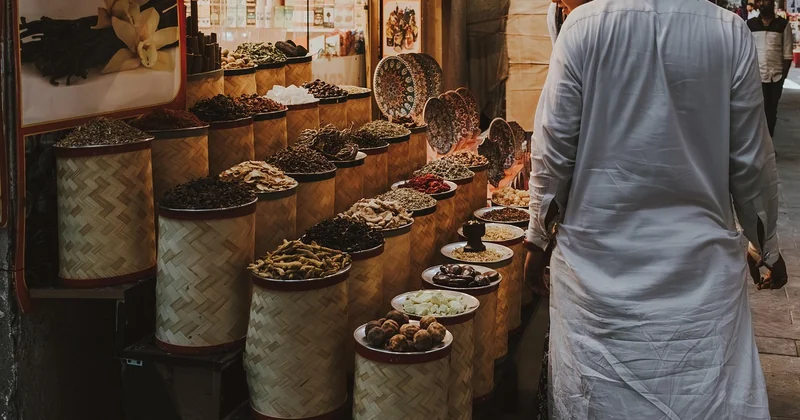
Walk through almost any night market on earth and you'll see the pattern: everything served on a plastic plate, in a plastic bag, with a plastic spoon, wrapped in a plastic bag, handed over in another bag. Four pieces of plastic for one portion of noodles.
You can push back effectively, but you have to be prepared and you have to accept looking slightly odd.
- Carry a lightweight container — a collapsible bowl or box weighs almost nothing.
- Bring your own spork. Bamboo or metal, doesn't matter. Just have it on you, always, not buried in the hotel room.
- A cloth bag folds into a pocket and replaces every plastic bag you'd otherwise accept.
- Learn how to say "no bag, thank you" in the local language. This single phrase did more for me than any piece of gear.
The refusals add up fast. Over a nine-day trip through street-food-heavy cities, bringing my own container and cutlery cut my waste to roughly a third of what it had been on an equivalent trip the year before. Not zero. A third. That's the honest number.
What to do when there's no zero-waste option
There will be days when every option is plastic and refusing means not eating. Take the plastic. Eat the food.
The question is what happens next. My rule, learned the hard way: keep one small bag for plastic you couldn't avoid, and deal with it properly at the end rather than dumping it into a bin that will send it to a landfill or a river. In countries with functioning recycling, sort it. In countries without, at minimum don't leave it somewhere it'll blow into the sea.
Is this a perfect solution? No. It's the honest one.
What you can realistically expect to avoid
Nobody likes this part, so I'll be blunt. Perfect plastic-free travel is not achievable for most destinations in 2026. The infrastructure isn't there.
What is achievable is substantial. Based on my own tracking across four trips, a prepared traveller can cut single-use plastic by somewhere between 60% and 80% compared to an unprepared one on the same itinerary. The remaining 20 to 40% comes from systems you don't control: airline catering, hotel supply chains, packaging that arrived in the country before you did.
Chasing the last 20% is what burns people out and makes them quit entirely. I watched it happen to a friend who spent a two-week trip in a state of low-grade rage about cling film. She hasn't tried again.
The short version
- Check tap water quality before booking, not after.
- Filtered bottle beats bottled water on weight, cost and waste.
- Refillable containers plus solid toiletries solve the bathroom problem.
- Email your accommodation about single-use plastic at the booking stage.
- Carry a container, a spork and a cloth bag everywhere. Every meal.
- Accept the plastic you can't avoid and dispose of it responsibly.
The trip where it finally clicked
On my last trip, a two-week rail journey, I came home with a single small bag of unavoidable plastic. About 200 grams. The first trip had produced 1.8 kilos.

But the number that stuck with me wasn't mine. It was the guesthouse owner in a small town who told me, almost offhandedly, that guests kept asking her to stop putting bottled water in the rooms — so she'd installed a refill station in the hallway. She did it because enough people asked.
That's the part the gear lists never mention. Every time you refuse a plastic bag, decline a wrapped cup, or send an email before you arrive, you're not just reducing your own footprint. You're making it slightly more normal for the next traveller — and slightly harder for the business to keep doing it the old way.
Bring the bottle. Send the email. Say no to the bag. The rest follows.