You're standing on the quay at Alimos Marina at seven in the morning, coffee going cold in your hand, and the skipper is pointing at a weather map that shows a wall of dark red sweeping down the Aegean. That's the moment most people realise a luxury yacht charter in the Greek islands isn't really about the boat. It's about the itinerary, and whether the itinerary was built for the wind you're actually going to get.
I've spent enough weeks on charter boats in the Aegean to have learned this the expensive way. My worst trip wasn't the one with the old generator or the leaking dinghy. It was the one where we booked a Cyclades loop for the last week of July and spent four days beating into a force-seven meltemi because nobody looked at the sailing distances and nobody asked the right questions before signing.
So this is the article I wish a charter broker had handed me back then: real distances, real constraints, and honest talk about which island groups actually work — and when.
Key Takeaways
- One week in the Cyclades means roughly 120–150 nautical miles of sailing. That's a comfortable pace if you pick one cluster of islands and skip the rest.
- The meltemi is the single biggest factor in any Greek itinerary. From July to mid-August it can shut down whole routes.
- Crewed charters in Greece typically run well into five figures per week; bareboat is a fraction of that, and APA (the advance provisioning allowance) catches almost everyone off guard the first time.
- Athens has three main embarkation points — Alimos, Lavrio, and Piraeus — and the one you choose should follow the itinerary, not the other way round.
- The Sporades and the Ionian reward people who want wind protection; the Cyclades reward people who want the picture-postcard version of Greece.
- What separates a good itinerary from a bad one is usually energy, not distance: how many hours under way per day, and how many anchorages versus marinas.
Why your luxury yacht charter Greek islands itinerary decides everything
Two charters leave the same marina on the same Saturday with the same boat model. One comes back relaxed, tanned, and already planning next year. The other comes back with a crew that barely spoke by day six. The difference is almost never the yacht. It's the plan.
The Greek islands look close together on a map. They are not. A passage that reads like a short hop can be six or seven hours into a headwind, and by the third day of that, the shine comes off even a very nice 50-footer. The Greek cruising grounds are also wildly varied — the Cyclades sit in the middle of the Aegean and take the full force of the northern winds, while the Ionian is a much gentler proposition and the Sporades sit in a kind of sheltered pocket between the mainland and Euboea.
Here's the thing: brokers will happily sell you an itinerary that strings together Santorini, Mykonos, and Milos in five days. It's technically possible. It's also a great way to spend your holiday motorsailing into chop.
The three factors that actually shape a route
- Wind direction and strength — the meltemi, mostly. It blows from the north, usually force 4 to 6, sometimes 7 to 8 in July and August, and it can last three to five days.
- Distance vs. hours under way — a 25-nautical-mile leg is four or five hours in a good breeze, seven in a bad one. Multiply that by a week and the math gets sobering.
- Anchorage and marina capacity — popular spots fill up. Arriving at 6pm in high season and expecting a berth in a place like Naoussa is a fantasy.
Once you accept these three, the itinerary almost writes itself. You stop trying to "see" the Greek islands and start figuring out which ones reward the weather you're likely to get.
Cyclades, Ionian or Sporades: which island group fits your charter
This is the decision that matters more than any other, and it's the one most people get wrong because they book by island name rather than by wind and season.
The Cyclades — dramatic, windy, and worth the effort
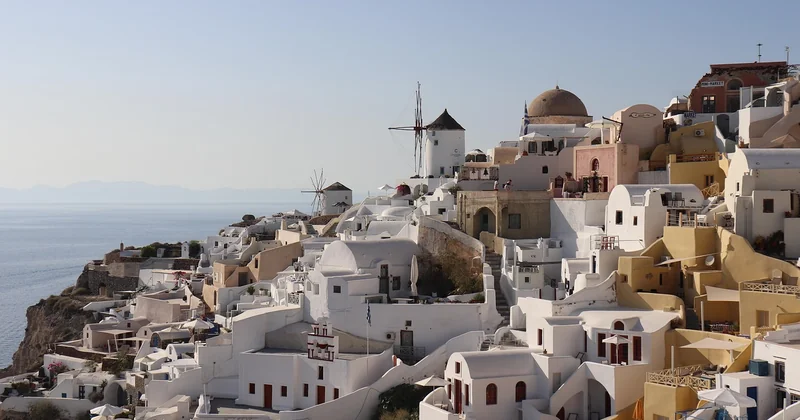
Paros, Naxos, Milos, Sifnos, Serifos, Folegandros, and of course Santorini and Mykonos. This is the Greece that shows up on every poster, and it earns it: the landscape is genuinely strange, with whitewashed villages clinging to calderas and beaches that look photoshopped.
The catch is the wind. In July and August the meltemi can make northern-facing anchorages uncomfortable to unpleasant, and it turns the crossing from Milos to Santorini into a long, salty day. In June or September, the same itinerary is a different holiday entirely. If I had to pick one window for a Cyclades charter, I'd take the second half of June or the whole of September without hesitation.
A workable seven-day Cyclades loop (roughly 130 nautical miles):
- Alimos → Kea (about 20nm): a gentle first day to shake off the jet lag.
- Kea → Syros (about 30nm): check in at Ermoupoli, which is one of the prettiest towns in the Aegean.
- Syros → Paros (about 25nm): anchor off Naoussa or Kolymbithres.
- Paros → Sifnos (about 25nm): quiet, well-sheltered, and the food is excellent.
- Sifnos → Milos (about 25nm): the geological showpiece, with anchorages that feel otherworldly.
- Milos → back toward the mainland (about 35–40nm): a longer day, then a short hop to the marina on day seven.
That's six short hops and one long one. It's a rhythm that lets you swim in the morning, sail in the afternoon, and eat well at night. It's also deliberately not the Santorini-and-Mykonos version.
The Ionian — gentler, greener, family-friendly
Lefkada, Kefalonia, Ithaca, Zakynthos, and Meganisi sit in water that's noticeably calmer. The afternoon breeze is reliable but manageable, the swim stops are plentiful, and the distances are short. If you're chartering with children or with people who've never sailed before, this is where I'd put you, and I'll defend that position.
The trade-off is that it's busier in August with flotillas and it doesn't have the Cyclades' drama. It's also further from Athens — most charters start from Lefkada, which means a transfer rather than a taxi from the airport.
The Sporades — the quiet middle path
Skiathos, Skopelos, Alonissos, and Skyros. The Sporades are the least-discussed of the three and, for a lot of people, the best value. The water is clear, the anchorages are unspoiled, and the whole group sits in a semi-sheltered position that reduces the meltemi's bite. Skiathos and Skopelos get busy in August; in late spring or early autumn they're close to empty.
| Island group | Wind exposure | Best months | Typical week (nm) | Best for |
|---|---|---|---|---|
| Cyclades | High — full meltemi | Late May–June, September | 120–150 | Drama, scenery, sailing |
| Ionian | Low–moderate | May–October | 80–110 | Families, first-timers |
| Sporades | Moderate | June, September | 90–120 | Quiet anchorages, low crowds |
What a crewed charter week actually costs
Numbers make people nervous, and brokers are often vague about them, so let's be concrete within the range I've seen on the ground.
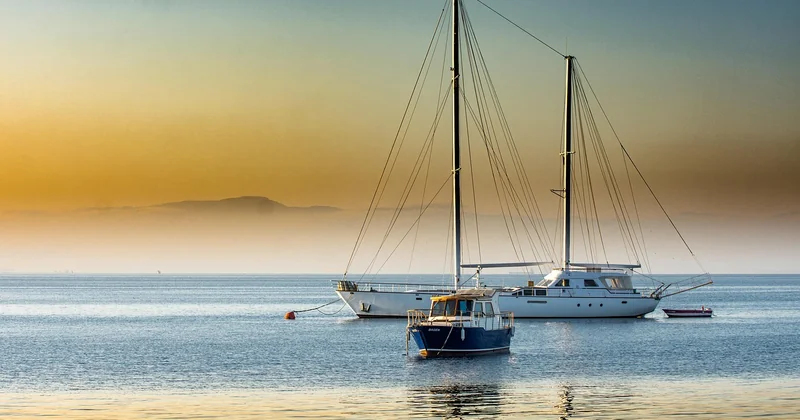
A crewed charter in Greece — say a 45 to 55-foot monohull or a catamaran with a skipper and a host — generally runs well into five figures per week in high season. Bareboat, by contrast, starts at a fraction of that, often in the low four figures for a smaller boat. The gap is what buys you a captain who knows the anchorages, a host who can cook, and the fact that you can actually relax.
Then there's the APA. The advance provisioning allowance covers food, fuel, mooring fees, and any port charges, and it's usually quoted as a percentage of the charter fee — think around a fifth to a third of the base price depending on the boat and your preferences. Anything unspent comes back to you at the end of the trip. It is not a hidden fee, but it's the one that catches people off guard, because it's the difference between "the charter costs X" and "the holiday costs X + Y."
The costs nobody quotes you
- Port and marina fees — in high season a berth can be expensive, and the most popular marinas fill up fast.
- Fuel — if you motorsail a lot because the wind is against you, the fuel bill rises accordingly.
- Water and provisioning — usually covered by the APA, but worth confirming.
- Transfers — Athens to Lavrio, Alimos, or Piraeus isn't free, and it's not always included.
One mistake I made early on: I assumed a "fully crewed" price meant everything. It doesn't. Ask specifically what's excluded, in writing, before you sign.
When to go, and what the meltemi will do to your plan
Timing is the second-biggest lever after island group, and it's where most planning goes wrong.
Month by month, in practice
- May — quiet, warm, water still brisk. Great value.
- June — near-perfect. The meltemi is present but less persistent.
- July–mid-August — peak season and peak meltemi. Hot, crowded, and the wind can dictate everything.
- Late August–September — my personal favourite. The sea is at its warmest, the crowds thin out, and the meltemi eases.
- October — cooler and quieter, with the odd unsettled day.
The meltemi is not a disaster — it's a feature of the region. If you're in the Cyclades, plan the route so that you sail with the wind and shelter in anchorages protected to the north. If you're in the Ionian or the Sporades, it matters far less. If the forecast turns ugly, be ready to change plans. The best charter itinerary is the one that bends.
Practical rules I've learned the hard way
A few things that don't fit neatly into any guide but matter enormously in practice.
Book your anchorages early. The nicest spots in the Cyclades fill up by early afternoon in July. Getting there at 5pm means anchoring in the second-best cove, which is fine — until it isn't. Some anchorages are also restricted, and marine parks around places like Alonissos in the Sporades have their own rules. Ask your skipper or broker which areas have restrictions before you plan a swim stop there.
Check your skipper's experience with the specific group. A skipper who knows the Ionian inside out may not know the Cyclades at all. Ask where they've sailed most recently and where they'd anchor in a meltemi. The answer tells you a lot.
Plan for one rest day. Not every day needs to be a passage. A day spent anchored, swimming, reading, and eating is often the best day of the trip, and it's the one most itineraries forget to include.
And finally — the thing I got wrong for years — don't try to see too much. The Greek islands reward patience. A seven-day charter that covers six islands and 130 nautical miles will feel richer than one that races through ten.
What to ask before you book
If you take one thing from this, make it a list of questions. The answers will tell you more about your charter than any brochure.
- Which island group does this itinerary assume, and does it match the season?
- How many hours under way per day, realistically, in that week's typical wind?
- What's excluded from the price — APA, transfers, port fees, fuel?
- How experienced is the skipper in this specific cruising area?
- What's the cancellation policy if the weather turns bad?
Get those five answered honestly and you're already ahead of most charterers. The rest — the swimming, the sunsets, the long lunches — takes care of itself.
Because that's really the point. A well-planned charter doesn't feel like a logistics exercise. It feels like a week where the wind is on your side, the anchor holds, and nobody has to look at a weather map at seven in the morning. The Greek islands have been doing this for a very long time. All you have to do is stop planning the wrong trip.