Mountain climbing preparation: what actually works when you're starting from zero
A friend of mine showed up at the trailhead for Mount Adams last summer carrying a 30-pound pack, brand new boots, and legs that had last seen a squat rack in 2021. He made it 900 metres up before his calves locked. We turned around. He was furious, mostly at himself.
That scene repeats itself constantly, and it has almost nothing to do with fitness. Mountain climbing preparation fails for predictable reasons, and almost none of them are lack of willpower. You train the wrong system, you carry the wrong weight, you skip the boring technical drills because they feel unglamorous. Then a real mountain exposes the gap in four hours.
What follows is the plan I wish someone had handed me when I started climbing seriously a few years back. It's built around amateur climbers—people with jobs, families, and maybe three training slots a week. No expeditions to Denali. Just a first real summit.
Key Takeaways
- Aerobic base matters more than leg strength for your first climbs. Roughly 80% of your training time should be easy, conversational-pace cardio.
- Carry weight on your back during training. A 12 kg pack on a stairwell changes everything about how a climb feels.
- Technique is not optional. Crampons, ice axe, self-arrest, and rope basics can be learned in a weekend but must be rehearsed until they're automatic.
- Altitude, cold, and sleep deprivation will break you faster than any steep slope. Prepare for the environment, not just the gradient.
- Build in one full rest week every four weeks. Overtraining before a climb is the most common self-inflicted injury I've seen.
Building a mountaineering training plan that fits a real life
Most training plans you'll find online assume you're 24, single, and unemployed. Three-hour sessions, six days a week, plus a weekend epic. That works for some people. For the rest of us, it produces two weeks of enthusiasm followed by a month of guilt.
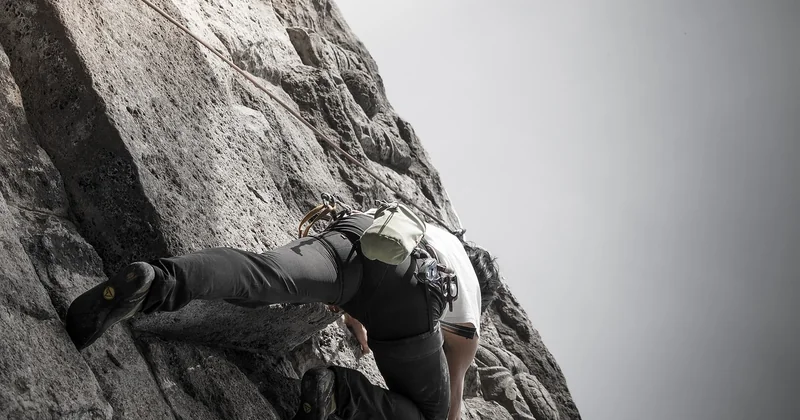
Here's what I'd actually recommend. Three structured sessions per week, plus whatever walking you already do. Add one long outing every ten to fourteen days. Six to eight weeks of this gets most reasonably healthy adults to the point where a 1,200-metre gain on a moderate route feels manageable.
What does a mountain climbing exercise session actually look like?
Two sessions are cardio. One is strength and stability. That's it.
A cardio session is thirty to fifty minutes of steady work at a pace where you could hold a conversation but wouldn't enjoy it. Incline treadmill walking, cycling, or stair climbing all qualify. Heart rate somewhere between 65% and 75% of your maximum. If you don't know your max, use the rough formula 220 minus your age and don't obsess over it.
The strength session is where most people go wrong. They load up a barbell and squat heavy, which builds quads and nothing useful. What you want instead:
- Weighted step-ups onto a box or bench—three sets of fifteen per leg, with a pack on
- Single-leg Romanian deadlifts, which expose every weakness in your hips
- Calf raises, done slowly, both standing and seated
- Planks and side planks, held for time rather than reps
- Farmer's carries around the block, because hauling a pack uphill is a full-body problem
That last one sounds silly. Do it anyway. My first attempt at a 25 kg carry for 200 metres left my grip shot for two days.
How to climb a mountain step by step, in terms of load progression
Progressive overload means adding pack weight or elevation gain, never both at once. Start with 8 kg on your back. Add roughly 1 kg per week. By week six, you should be comfortable with 15 kg on a two-hour uphill walk.
Long outings deserve their own rhythm. A four-hour hike with 800 metres of gain two weeks before your climb is worth more than ten gym sessions. Your goal isn't to feel tired at the end. It's to finish and still be able to eat dinner and sleep well.
| Week | Pack weight | Long outing | Focus |
|---|---|---|---|
| 1–2 | 8 kg | 2 hours, 400 m gain | Adaptation, joint tolerance |
| 3–4 | 10–12 kg | 3 hours, 600 m gain | Cardio base, technique drills |
| 5–6 | 12–15 kg | 4–5 hours, 900 m gain | Endurance, nutrition practice |
| 7 | 10 kg | Rest week, easy walks only | Recovery before the real thing |
The technical skills everyone skips (and regrets skipping)
Physical preparation gets all the attention. Technical preparation gets ignored, and that's how people end up sliding 200 metres down a snowfield with a picket flailing uselessly in one hand.
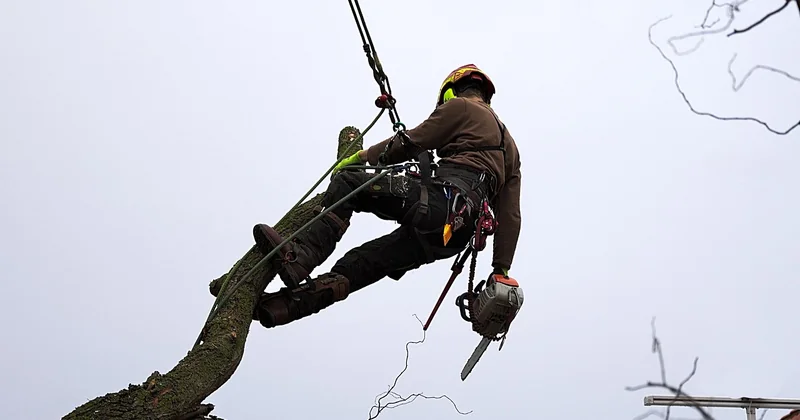
You don't need to be an alpinist. You do need four things solid before you set foot on anything with sustained snow or ice.
- Crampon technique. Flat-footing on low-angle snow, front-pointing on steeper terrain, and knowing when French technique becomes unsafe.
- Ice axe use. Self-belay, self-arrest, and the difference between a pick and an adze when things go sideways.
- Basic knots. Figure-eight on a bight, clove hitch, Munter hitch. That's the short list. Learn them in gloves.
- Rope travel. How to move together on a glacier, when to place protection, how to build a basic anchor.
Rehearsal matters more than instruction. I've watched competent athletes freeze on a 35-degree slope because their one self-arrest class was three months ago and the movement wasn't burned in. Practice on grass, then on snow that won't hurt you.
Altitude, cold, and the mental side nobody prepares for
The mountain doesn't care about your Strava history. Above 3,000 metres, most unacclimatised people lose 20% to 30% of their aerobic capacity, and there's no training shortcut around that. The only useful preparation is time at altitude, done gradually, with honest rest days.
Cold compounds everything. Your hands stop working fine movements around 10°C, your decision-making degrades well before you feel it happening, and your appetite vanishes exactly when you need calories most.
Which brings up the mental piece. Turning around is a skill. I've done it twice on routes I'd been planning for months, and both times it felt terrible and both times it was correct. The climbers I respect most are the ones who walk away without drama when the conditions or their own body say no.
Why dehydration ruins more climbs than steep terrain
You'll drink less than you think. Cold suppresses thirst, and hauling a liter of water up 1,000 metres feels absurd until you're three hours in with a headache. Aim for 500 ml every hour on moderate effort, more above 3,500 metres.
Electrolytes aren't optional either. Plain water alone during a long climb can dilute your sodium enough to cause cramps and confusion. A pinch of salt in your bottle or a proper electrolyte tab solves it.
Gear, pacing, and the small decisions that matter
Boots break in over weeks, not days. Buy them two months before your climb and wear them on every training walk. Blisters on summit day are entirely avoidable and entirely your fault.
Pacing is the other unglamorous skill. The rule that has served me best: start slower than feels natural and stay there. If you're breathing hard enough that you can't talk in short sentences, you're going too fast for a long day. Rest for ten minutes every hour, not just when you're wrecked.
Pack light, but not stupidly light. A headlamp, an emergency bivvy, an extra insulating layer, and enough food for two extra hours. That's roughly 2 kg of insurance you'll probably never use and will be very glad to have.
Where to actually begin
Pick a mountain with a walk-up route, a well-travelled trail, and a realistic turnaround time. Something like Mount St. Helens, Ben Nevis via the tourist path, or a long ridge walk with 1,000 metres of gain. Give yourself eight weeks. Follow the table above. Do the technique drills even when they feel pointless.
The most useful thing I've learned is that summit day is the least important part of the whole process. It's the last five percent. Everything that determines whether you get up and back safely happens in the six weeks before, in stairwells and on muddy hillsides and in a field practising self-arrest until your shoulder aches.
Show up prepared, and the mountain becomes a long, cold, magnificent walk. Show up unprepared, and it becomes a lesson you'd rather not have paid for. The choice is entirely in the training weeks—which start, inconveniently, right now.