Fourteen days in Vietnam with a 40-litre backpack, and I came home with exactly one piece of trash: a single plastic water bottle cap I found in my bag at the airport and couldn't figure out where it came from. Everything else—the shampoo, the toothpaste, the snacks, the laundry—went in and came out without generating a bin full of wrappers. That's not a boast. It's the result of about four years of getting this wrong before getting it right.
Packing zero waste for a trip sounds like a niche hobby until you do the math. A typical traveller on a two-week holiday goes through somewhere between 15 and 20 small plastic bottles of toiletries, a handful of single-use water bottles per day, and a stream of airport snacks wrapped in film. Multiply that across hundreds of millions of trips and you're looking at a genuinely large pile of waste that didn't need to exist.
Key Takeaways
- Solids beat liquids for both weight and airport security—but the 3-1-1 rule still applies to anything you carry as a paste or gel.
- Water purification is the single biggest waste problem on the road, and it has a real solution: a filter bottle or UV pen replaces dozens of bottles.
- Quantities matter more than gear. I got this wrong for two years before I sat down and counted.
- Bamboo and wooden items can trigger customs rules in some countries—check before you fly.
- Zero waste is a direction, not a scorecard. One perfect trip is worth less than a habit you actually keep.
Why zero waste packing changes your trip more than it changes the planet
Here's the counter-intuitive part, and I'll defend it: the environmental argument for packing lighter is the weaker reason to do it. The stronger one is that it makes travel better.
When I first switched to solid toiletries in early 2023, I did it for the usual reasons. What surprised me was everything else. My toiletry bag went from 900 grams to about 220. Nothing leaked onto my clothes. Nothing got confiscated. I stopped hunting for a pharmacy in every new city.
The airport security reality nobody explains properly
Most guides wave this away with "solids pass security." That's half true.
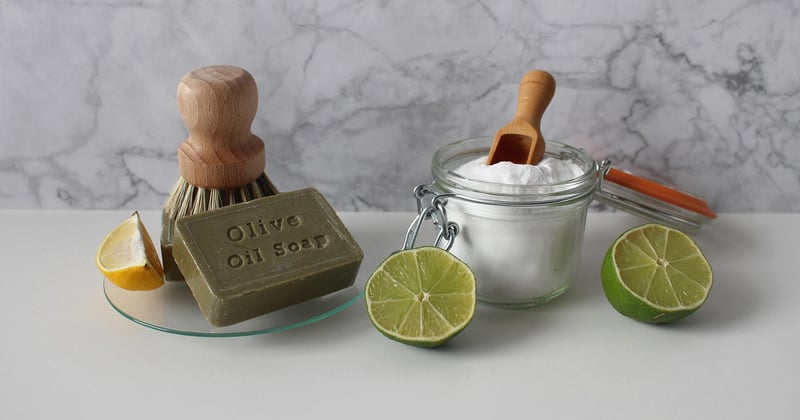
The 3-1-1 rule still governs anything that spreads. Toothpaste in a tube, gel deodorant, liquid hand sanitiser—all still count toward your one quart-sized bag, still capped at 100 ml per container in most countries. What actually dodge the rule are genuinely solid items: bar shampoo, bar soap, solid deodorant in a stick, toothpaste tablets. Powders are a grey zone that changed after 2018 and vary by country, so I don't gamble on them anymore.
I lost a full tube of expensive sunscreen to a security officer in Lisbon because I'd assumed "it's basically a cream, it's fine." It wasn't fine. I now keep a solid sunscreen stick in my main bag and treat liquid sunscreen as a quart-bag item, no exceptions.
What actually takes up space in your bag
Weight and volume tell different stories, and this trips people up.
| Item | Liquid version (weight/volume) | Solid version (weight/volume) | Worth switching? |
|---|---|---|---|
| Shampoo (14 days) | ~250 g, 250 ml bottle | ~80 g bar | Yes, clearly |
| Toothpaste (14 days) | ~90 g tube | ~40 tablets, ~30 g | Yes, but count them |
| Deodorant | ~75 g | ~60 g stick | Marginal |
| Laundry detergent | ~200 g liquid | ~50 g sheets or bar | Yes |
| Sunscreen | ~200 g | ~90 g stick or tin | Yes, but coverage matters |
That table is from two weeks of actual use, not a guess. Note the deodorant—solid sticks are barely lighter, and I still carry liquid in a small refillable because the solid ones I've tried stop working after about ten hours. Not everything is worth switching, and pretending otherwise is how people quit.
The packing rules everyone asks about
These come up constantly, and most explanations online are either vague or wrong. Let me handle them straight.
What is the 5 4 3 2 1 rule for packing?
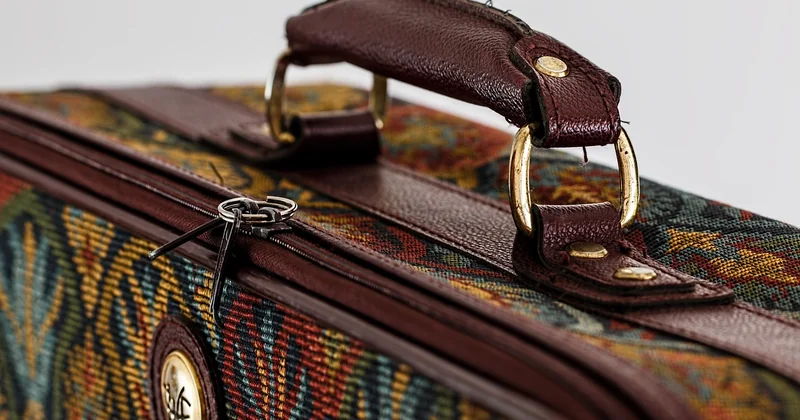
The 5-4-3-2-1 rule is a counting method for building a capsule wardrobe: five tops, four bottoms, three pairs of shoes, two accessories (a hat, a scarf, a belt), and one swimsuit or one bag. It's a tool for deciding how many clothes to bring, and it works best for trips of one to two weeks where you'll do laundry at least once.
For a zero-waste traveller, the rule has a hidden benefit: fewer clothes means fewer things to wash, which means less laundry detergent to carry, which means one less liquid (or a smaller bar) in your kit. I use a stripped version—four tops, three bottoms, two pairs of shoes—because I'd rather wash a shirt in a sink than carry a heavier bag.
What is the 3-5-7 rule in packing?
The 3-5-7 rule is a lighter variant: three tops, five bottoms is not how it goes—the common version is three pairs of shoes, five tops, seven bottoms, or some variation where the numbers reflect a specific trip length. Honestly, the versions differ so much between sources that I'd treat it as a loose guideline rather than a standard. The principle underneath both the 5-4-3-2-1 rule and the 3-5-7 rule is the same: fix your numbers before you pack, not while you pack. That's the part that works. The exact figures are personal.
What are the 5 R's of zero-waste living?
The five R's are Refuse, Reduce, Reuse, Recycle, and Rot—in that order. The order is the point, not the list. Refusing comes first because the waste you never accept is waste you never have to manage. Recycling sits near the end because it's the option of last resort, not the goal.
Applied to packing, it looks like this: you refuse the plastic bag at the airport kiosk, reduce to one toiletry kit instead of three, reuse the same filter bottle for years, and only then worry about whether the packaging is recyclable. Most zero-waste packing guides skip straight to Reuse and Recycle, which is why they feel like shopping lists instead of habits.
The water problem, which is the real waste on the road
Toiletries are the visible waste. Water bottles are the invisible one.
In countries where tap water isn't safe to drink, a traveller can easily go through four to six single-use bottles a day. Over two weeks, that's somewhere between 50 and 80 bottles per person. In places without reliable recycling infrastructure, a large share of those end up in open dumps or waterways.
My solution, refined over several trips: a filter bottle for tap water that's mostly safe, plus a backup purification method for sketchier sources.
- Filter bottle with an integrated hollow-fibre membrane—handles most tap water and clear freshwater
- UV purification pen for hotel taps, backup to the filter
- Purification tablets as the emergency layer, flat and weightless
- One collapsible silicone bottle as a spare
- A small cloth produce bag or two for market food
The catch with filter bottles: they don't remove viruses well, only bacteria and protozoa. For tap water in most middle-income countries, that's fine. For genuinely questionable sources, you need the UV or the tablets on top. I made the mistake of relying on a filter alone in a rural area and spent two days regretting it.
How many tablets, bars, and sheets do you actually need?
This is the question no guide answers, and it's the one that matters most for packing light.
From my own counting over a 14-day trip:
- Toothpaste tablets: 2 per day, so 30 for two weeks with a margin. They're tiny; a 60-tablet tin lasted me 25 days.
- Shampoo bar: one 80 g bar handled 14 days of daily washing with about a third left.
- Soap bar: one 100 g bar for body and laundry, lasted the full trip and came home.
- Laundry sheets: 8 sheets for two sink-washes and one machine load per week.
- Solid deodorant: I don't count these because I gave up on them.
Write your own numbers down. The first time I travelled with solid toiletries I packed for a month and ran out in nine days. The second time I overcorrected and carried double. Counting is what fixed it.
Customs, quarantine, and the rules nobody mentions
Bamboo toothbrushes, wooden cutlery, and some plant-based products can trigger customs questions. Australia, New Zealand, and several island nations have strict biosecurity rules around untreated wood and plant material. A bamboo toothbrush is almost always fine; a wooden bowl or a bamboo straw might not be, depending on the officer and the day.
I've been pulled aside twice—once in Auckland over a wooden spoon I'd picked up as a souvenir, once in Chile over a bag of loose tea. Neither was a disaster, but both cost me forty minutes. If you're carrying anything plant-based, declare it. The worst outcome of declaring is a conversation. The worst outcome of not declaring is a fine.
Zero waste in flight and at your accommodation
The plane is where most people give up.
You can decline the plastic cup and use your own bottle—most crew will fill it. You can refuse the snack wrapper by bringing your own. You can eat before boarding. It's not glamorous and the flight attendant might look at you strangely, but it works.
At hotels, the biggest wins are simple. Hang the do-not-disturb sign to skip daily room service; that alone cuts a surprising amount of linen and cleaning waste. Request no bottled water. Ask whether the hotel has a refill station—many do now, and staff will usually show you where it is. At hostels, bring a small cloth bag for food and a reusable coffee cup; communal kitchens are where the waste piles up fastest.
And do your laundry in the sink. A bar of soap, ten minutes, and a towel to wring the shirt dry. It's the single habit that lets you travel with less of everything.
What is the most ecologically friendly way to travel?
Short answer: stay closer to home, go slower, and stay longer. A train journey of 600 kilometres produces a small fraction of the emissions of the equivalent flight, and a two-week stay in one region produces far less than a two-week sprint through four countries.
The longer answer is that "most ecological" depends on what you're measuring. Trains win on emissions per passenger-kilometre. Buses are close behind. Cars are worse unless they're full. Flights are the worst option per kilometre, and short-haul flights are the worst of the worst because takeoff burns most of the fuel.
But here's what the emissions debate tends to miss: the waste you generate at your destination is a choice you make every day, and it's often easier to change than your transport. A traveller who flies but brings a filter bottle, solid toiletries, and a refusal habit can generate less plastic waste than a train traveller who buys bottled water at every stop.
My honest position: do both. Take the train when it's reasonable. Fly when it isn't. And pack the same kit either way.
The mistakes I made so you don't have to
I've thrown away three filter bottles that cracked in my bag. I've carried a metal spork through six countries and used it twice. I've bought solid shampoo from a brand that turned to mush in humidity.
The lesson isn't "buy better gear." It's that the gear matters less than the habit. My current kit fits in two small pouches and weighs under 400 grams. It's not the lightest setup possible. It's the one I actually maintain, trip after trip, without thinking about it.
If you take one thing from all of this: start with the water bottle. It's the biggest win, the easiest habit, and the one that will change how you travel more than any other single item. Everything else is optimisation.
The bottle cap I found in my bag at the end of that Vietnam trip—I still don't know how it got there. I kept it. It's sitting on my desk as I write this, which is a slightly ridiculous thing to admit, but it's the most honest souvenir I've ever brought home.